 Busirank Team
Page 1: Why Review Management Is a System, Not a Task
The Misconception That Costs Businesses Customers
Most business owners think of review management as responding to bad reviews. That’s like thinking of fitness as lifting weights when you’re injured.
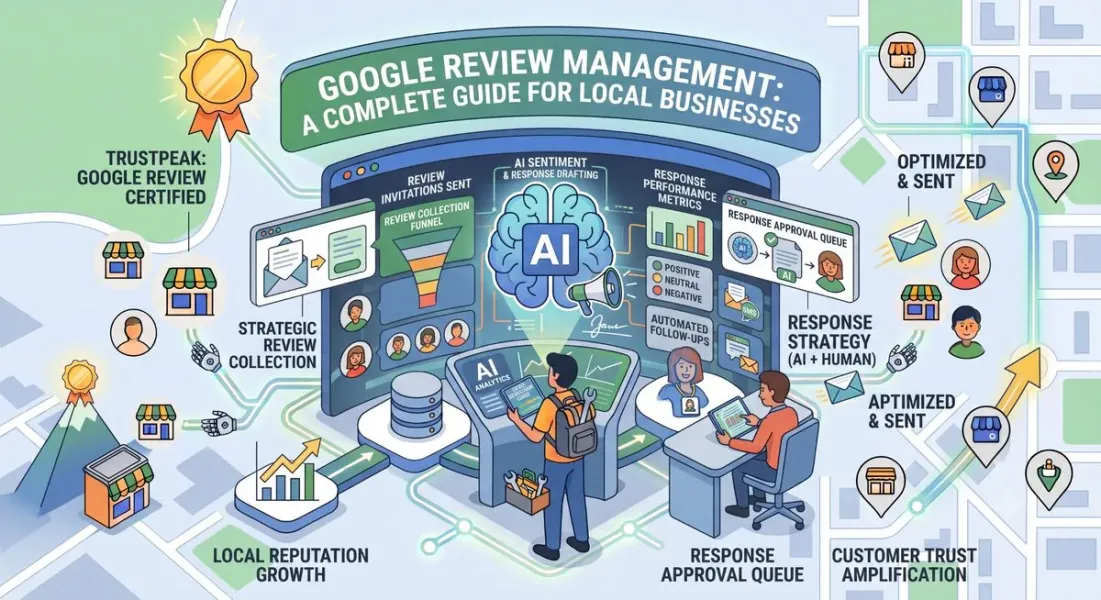
Review management is a system with five parts:
- Generation — getting reviews consistently
- Monitoring — knowing what’s being said, where, and when
- Response — replying to every review, thoughtfully
- Resolution — handling problems that reviews reveal
- Analysis — extracting operational intelligence from feedback
Businesses that treat it as “reply to negatives” fail at all five. Businesses that treat it as a system build a compounding reputation asset.
The Numbers That Make This Non-Negotiable
- 91% of consumers read online reviews before choosing a local business
- 88% trust online reviews as much as personal recommendations
- 89% expect businesses to respond to reviews
- 53% expect a reply to a negative review within a week
- Customers who receive a response to a negative review will spend up to 45% more And here’s the part most businesses miss: reviews influence rankings, not just conversions. Quantity, quality, velocity, recency, and owner responses all correlate with stronger local visibility.
You’re not managing reviews for reputation alone. You’re managing them for discovery.
The Five Failure Modes
Every business that struggles with reviews is failing in one of five specific ways:
-
No system for generation. They ask occasionally, inconsistently, and only when they remember. Review volume stays low.
-
No monitoring. They don’t know a review exists until a customer mentions it—or until it’s weeks old.
-
Inconsistent responses. They reply to positives but ignore negatives, or reply for a month and then stop.
-
No resolution loop. They respond to complaints publicly but never fix the underlying issue. The same complaints recur.
-
No analysis. They never step back and ask what their reviews are telling them about operations.
This guide addresses all five.
What This Guide Covers
- Page 1: Why review management is a system and where businesses fail
- Page 2: Generation and monitoring systems
- Page 3: Response strategy for every review type
- Page 4: Negative reviews, fake reviews, and resolution
- Page 5: Analysis, tools, measurement, and conclusion
Page 2: Generation and Monitoring Systems
Building a Review Generation Engine
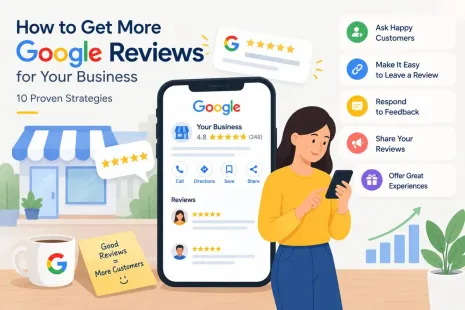
Reviews don’t accumulate by accident. They accumulate because you’ve built a system that asks every customer, every time, through the lowest-friction channel available.
The five components:
- Direct review link Get it from your GBP dashboard (“Ask for reviews”). Shorten it. Make it memorable.
2. Distribution everywhere
- Email signature
- Website footer and contact page
- Post-purchase thank-you page
- Receipts and invoices
- SMS follow-ups
- Social media bios
- Customer portal or app
- QR codes at physical touchpoints
-
Timing rules Ask at peak satisfaction, not on a schedule. The best moment is minutes after a positive experience—not days later when the feeling has faded.
-
Staff training Give your team a simple script:
“We’re so glad you’re happy with [service]. Would you mind leaving us a quick Google review? I can text you the link right now.”
- Automation Set up email or SMS sequences via a tool like Podium, Birdeye, or GatherUp. A three-message sequence (day 0, day 3, day 7) typically outperforms a single request.
Setting Generation Targets
Benchmark against your top three local pack competitors. Your goal is to match or exceed the highest review count while maintaining a rating between 4.3 and 4.8.
| Market Type | Typical Competitor Review Count | Your Monthly Target |
|---|---|---|
| Small town | 20–80 | 3–5 new reviews |
| Mid-size city | 100–300 | 6–10 new reviews |
| Competitive urban | 300–1,000+ | 12–25 new reviews |
Warning sign: If your most recent review is more than 30 days old, your velocity has stalled.
What Never to Do
- Buy reviews. Violates Google’s policies. Grounds for suspension.
- Incentivize reviews. Offering discounts, gifts, or entries in exchange for reviews is prohibited.
- Gate reviews. Only showing happy customers the review option is prohibited.
- Write reviews yourself or ask staff to. Fake reviews risk suspension and destroy trust if discovered. These aren’t gray areas. They’re explicit policy violations that can erase years of work overnight.
Monitoring: Knowing What’s Being Said
You can’t respond to what you don’t see. Monitoring must be systematic.
What to monitor:
- Google Business Profile reviews (all locations)
- Yelp
- Industry-specific platforms (Healthgrades, Avvo, TripAdvisor, Houzz)
- Better Business Bureau
- Social media mentions How to monitor:
- Turn on notifications in your GBP dashboard and mobile app
- Set up Google Alerts for your business name
- Use a review management platform if you have multiple locations or high volume
- Check daily for new reviews during business hours
- Audit weekly across all platforms The response window: Every review should be seen within 24 hours. Negative reviews ideally within hours.
Handling Reviews Across Multiple Platforms
Google is the priority, but it’s not the only platform that matters.
Priority order:
- Google Business Profile — highest impact on local SEO and consumer decisions
- Industry-specific platforms — Healthgrades, Avvo, TripAdvisor depend on your vertical
- Yelp — still influential for restaurants and home services
- Facebook — high visibility, social proof
- Better Business Bureau — trust signal for some audiences Respond on every platform where you’re reviewed. Consistency across platforms signals a business that takes feedback seriously.
Generation and Monitoring Checklist
- Direct review link created and shortened
- Link distributed across 6+ touchpoints
- QR codes placed at physical locations
- Staff trained with a simple script
- Automated email/SMS sequence running
- Monthly generation target set
- Notifications enabled on GBP
- Google Alerts configured
- All review platforms identified
- Daily monitoring habit established
- Weekly cross-platform audit scheduled
Page 3: Response Strategy for Every Review Type
The Universal Response Framework
Every response—positive, neutral, or negative—follows the same core structure:
- Thank them genuinely
- Reference a specific detail they mentioned
- Add value, invite back, or move offline depending on sentiment The framework is consistent. The tone and content shift by review type.
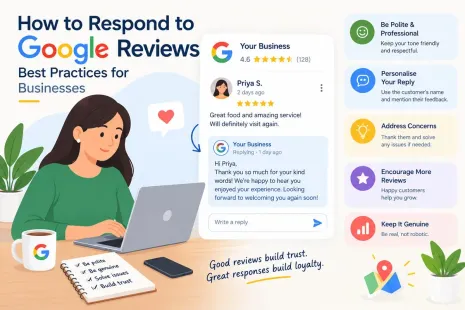
Responding to 5-Star Reviews
Positive reviews are the ones businesses skip when they get busy. That’s a mistake—they’re your best opportunity to reinforce trust and encourage repeat business.
Formula: Thank → specific detail → invite back
Example:
“Thank you, Priya! So glad the team could get your AC running the same day you called—summer emergencies are no fun. We’re here whenever you need us.”
What to avoid:
- One-word replies (“Thanks!”)
- Generic responses (“We appreciate your business”)
- Asking for referrals or another review in your reply
- Over-the-top enthusiasm that feels performative
Responding to 4-Star Reviews
Four-star reviews often hide useful feedback in praise. Read carefully.
If no complaint:
“Thank you for the 4-star review, Marcus! Glad you had a good experience. If there’s anything we could have done better, we’d love to hear it—feel free to reach out at [email].”
If mild complaint:
“Thank you, Marcus. You’re right that the wait was longer than it should have been—we’ve adjusted our scheduling since. Hope to serve you again.”
Why this works: It acknowledges the gap without defensiveness and shows improvement.
Responding to 3-Star Reviews
Three-star reviews are the most neglected and the most valuable. These customers are on the fence—a thoughtful response can convert them.
Formula: Thank → acknowledge what worked → own what didn’t → invite them back
Example:
“Thank you for the honest feedback, Dana. Glad the food landed well, but we’re sorry the service felt rushed—that’s not the experience we want to give. We’d love another chance to show you what we’re really capable of.”
Responding to Mixed Reviews
When praise and criticism both appear, balance your response.
Example:
“Thanks for the detailed review, Elena. We’re thrilled you loved the venue and the staff, but sorry the parking situation caused frustration. We’ve recently added overflow parking to address exactly that. Hope to see you again.”
Responding to Rating-Only Reviews
Even without text, respond.
5 stars, no text:
“Thank you for the 5-star rating! We appreciate you.”
1 star, no text:
“Thank you for the rating. We’re sorry we fell short—if you’re open to sharing more, we’d like to make it right. Please reach out at [email].”
Response Timing
| Review Type | Target Response Time |
|---|---|
| Positive | Within 48 hours |
| Neutral or mixed | Within 24–48 hours |
| Negative | Within 24 hours |
| Crisis or viral | Within 12 hours, then follow up |
| Fake or policy violation | Flag immediately; respond within 24 hours if it stays |
Personalization Rules
Always:
-
Use the reviewer’s first name
-
Reference a specific detail from their review
-
Match your response length to theirs (short review = short reply)
-
Vary your openings — don’t start every response with “Thank you” Never:
-
Copy-paste identical responses
-
Share private customer information
-
Offer refunds or compensation publicly
-
Ask the reviewer to change their review in a public reply
-
Mention that a review is fake in your public response
Response Checklist
- 100% response rate across all platforms
- Response within 48 hours (24 for negatives)
- Reviewer’s name used where available
- Specific detail referenced
- Openings varied
- No generic filler phrases
- No private information shared
Page 4: Negative Reviews, Fake Reviews, and Resolution
The Negative Review Playbook
Negative reviews are inevitable. How you handle them is what separates trusted businesses from forgotten ones.
The six-step framework:
-
Pause. Read the review twice. Check your records. Understand what actually happened before you write anything.
-
Respond within 24 hours. Speed shows you take feedback seriously.
-
Thank them for the feedback. “Thank you for telling us” is a powerful opener, even when it stings.
-
Acknowledge the specific issue. Reference what they complained about. Generic apologies feel hollow.
-
Apologize sincerely—without excuses. “We’re sorry” works. “We’re sorry you feel that way” does not.
-
Move offline. Provide a direct contact and invite resolution.
Template:
“Thank you for sharing this, [Name]. We’re genuinely sorry about [specific issue]—that’s not the standard we hold ourselves to. We’d like to make it right. Please contact me directly at [email/phone]. — [Owner name]“
Naming a Person Matters
“I’m sorry—please contact us” is weaker than “I’m sorry—please contact me, Maria, at [email].”
Named accountability reads as real. It tells readers that a specific human is responsible, not an anonymous department.
When the Review Is Unfair or Exaggerated
You still can’t argue publicly. Instead:
- Acknowledge their perspective
- State facts calmly and briefly if necessary
- Avoid “but” statements that negate the apology
- Move the conversation offline Example:
“Thank you for your feedback, [Name]. We’re sorry your experience didn’t meet expectations. We did communicate the timeline upfront, but we clearly could have done more to keep you informed. I’d welcome the chance to discuss this directly—please reach out at [email].”
This corrects the record without dismissing the complaint.
Handling Fake Reviews
Fake reviews—from competitors, trolls, or people who were never customers—are frustrating but manageable.
Step 1: Verify. Check your records. Were they ever a customer?
Step 2: Flag for removal. In your GBP dashboard, click the review, select “Flag as inappropriate,” and choose the reason. Grounds for removal:
- Spam or fake content
- Off-topic content
- Hate speech or harassment
- Personal information
- Conflicts of interest
- Advertising Step 3: Wait. Google reviews flags manually. It can take days or weeks.
Step 4: If it stays, respond carefully. Don’t call it fake publicly.
“Thank you for the feedback. We take all reviews seriously, but we’re unable to locate a record matching this experience. If we’ve made a mistake, we’d like to know—please reach out at [email].”
Step 5: Document. Keep records of fake reviews, flags, and outcomes. Patterns matter if you’re being targeted.
Crisis Situations and Coordinated Attacks
When a wave of negative reviews hits—whether from a viral incident, a coordinated attack, or an operational disaster—you’re in crisis mode.
Crisis protocol:
- Assemble a response team immediately (owner, marketing, legal if needed)
- Pause all scheduled posts until the situation stabilizes
- Draft one master statement and use it consistently across platforms
- Respond to the original review calmly and factually
- Don’t respond to every new negative review individually if it’s coordinated—respond to a few, then step back
- Never delete or hide reviews unless they violate policy
- Follow up publicly when the issue is resolved
- Learn and adjust internally Master statement template:
“We’re aware of the recent reviews and take these concerns seriously. We’re actively investigating what happened and are committed to making it right. If you’ve been affected, please contact us directly at [email/phone]. We’ll share an update as soon as we have more information.”
The Resolution Loop
Here’s the part most businesses skip: resolving the underlying issue.
Every negative review points to something. Sometimes it’s a misunderstanding. Sometimes it’s a real operational failure. Either way, if the same complaint appears three times, it’s not a review problem—it’s a business problem.
How to build a resolution loop:
- Categorize each negative review by theme (service, wait time, pricing, staff, quality)
- Track recurring themes monthly
- When a theme crosses a threshold (three or more instances in 90 days), escalate to operations
- Fix the root cause
- Note the fix in future responses where relevant (“We’ve since adjusted our scheduling”) This is how review management becomes business improvement rather than reputation patching.
When to Ask for a Review Update
If you successfully resolve a negative experience, it’s acceptable to ask the customer to consider updating their review. Do this privately, never publicly, and never pressure them.
Example email:
“Hi [Name], thanks again for giving us the chance to make things right. If you feel we’ve resolved your concern, we’d be grateful if you’d consider updating your review—but we completely understand either way.”
Many won’t update. That’s fine. The effort still matters.
Negative Review Checklist
- Every negative review responded to within 24 hours
- Specific issue acknowledged, not generalized
- Apology sincere, no minimizing language
- Named person and direct contact provided
- Conversation moved offline
- Fake reviews flagged and documented
- Crisis protocol documented and ready
- Review themes tracked monthly
- Root causes escalated and fixed
- Resolution follow-up sent privately
Page 5: Analysis, Tools, Measurement, and Conclusion
Turning Reviews Into Business Intelligence
Reviews contain operational data hiding in plain sight. Most businesses read them individually and never step back to look at patterns.
What to analyze monthly:
| Analysis | What It Reveals |
|---|---|
| Review volume by month | Velocity trend and generation effectiveness |
| Rating trend | Reputation health over time |
| Theme frequency | Recurring operational issues |
| Sentiment by theme | What’s working and what isn’t |
| Staff mentions | Individual performance signals |
| Service mentions | Which services drive satisfaction or complaints |
| Location mentions | Geographic strengths and gaps |
| Response time trend | Consistency of your engagement |
| Competitor review themes | Market gaps and opportunities |
How to do this efficiently: Export reviews quarterly into a spreadsheet. Categorize each by theme. Count frequency. Look for patterns. AI tools like Birdeye and Podium can automate sentiment and theme analysis if volume is high.
Benchmarking Against Competitors
Monthly, compare your profile to your top three local pack competitors:
- Review count
- Average rating
- Review velocity (new reviews in last 30 days)
- Response rate
- Response time
- Photo count
- Post frequency If you’re behind on any of these, you’ve found your priority for the month.
Tools Worth Knowing
| Tool | Best For | Key Features |
|---|---|---|
| Podium | Small to mid-size businesses | Review requests, responses, messaging |
| Birdeye | Multi-location businesses | Reviews, sentiment analysis, surveys |
| GatherUp | Budget-conscious businesses | Review generation and monitoring |
| Grade.us | Agencies and white-label | Multi-client review management |
| BrightLocal | Agencies and multi-location | Reviews, citations, rank tracking |
| Reputation.com | Enterprise | Full reputation management suite |
| Google Business Profile dashboard | Everyone | Free native review management |
Recommendation for most small businesses: Start with your free GBP dashboard for responses, and add a paid tool when volume exceeds 40 reviews per month or when managing multiple locations.
The Metrics That Matter
| Metric | Target | Frequency |
|---|---|---|
| Review count | Match top three competitors | Monthly |
| Average rating | 4.3–4.8 | Weekly |
| Review velocity | 4–8+ per month | Monthly |
| Response rate | 100% | Weekly |
| Response time | Under 48 hours (24 for negatives) | Weekly |
| Review sentiment trend | Stable or improving | Monthly |
| Theme frequency | Recurring issues decreasing | Monthly |
| Resolution rate | Issues resolved, not just acknowledged | Quarterly |
Common Review Management Mistakes
- Treating review management as “respond to negatives only”
- Skipping responses when business gets busy
- Copy-pasting identical responses
- Buying or incentivizing reviews
- Using review gating
- Arguing publicly with reviewers
- Sharing private customer information
- Not tracking review themes
- Never fixing root causes behind complaints
- Ignoring platforms other than Google
- Not benchmarking against competitors
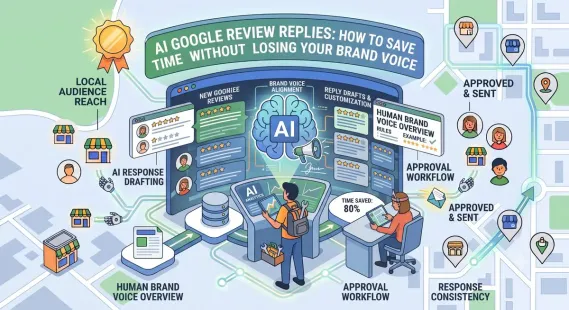
- Publishing AI-drafted responses without editing
- Responding emotionally in the moment
- Treating review management as a one-time project
Building a Sustainable System
Here’s what a mature review management system looks like for a typical small business:
Daily (5 minutes):
-
Check for new reviews
-
Respond to anything urgent Weekly (30 minutes):
-
Respond to all remaining reviews
-
Check Q&A for new questions
-
Verify response quality against your voice guide Monthly (45 minutes):
-
Review count, rating, velocity, response rate
-
Categorize new negative reviews by theme
-
Benchmark against top three competitors
-
Update generation tactics if velocity is lagging Quarterly (90 minutes):
-
Deep theme analysis across all reviews
-
Escalate recurring issues to operations
-
Refresh review request templates
-
Consider tool upgrades if volume warrants
-
Update your response templates based on what’s working Total: roughly three to four hours per month for full coverage.
Quick Reference Checklist
Generation:
-
Direct review link distributed everywhere
-
QR codes at physical touchpoints
-
Automated email/SMS sequences running
-
Staff trained on asking
-
Monthly velocity target set and met Monitoring:
-
Notifications enabled
-
Daily check habit established
-
All platforms covered
-
Google Alerts configured Response:
-
100% response rate
-
Under 48 hours (24 for negatives)
-
Every response personalized
-
Named person on negative replies
-
No generic filler Resolution:
-
Review themes tracked monthly
-
Recurring issues escalated
-
Root causes fixed
-
Resolution follow-ups sent privately Analysis:
-
Monthly metrics tracked
-
Competitor benchmarks reviewed
-
Quarterly deep analysis completed
-
Operational insights extracted
Conclusion
Google review management isn’t a task you complete—it’s a system you run. Generation, monitoring, response, resolution, and analysis. Miss any one of these and the others weaken.
The businesses that get this right share a few habits:
- They ask every customer, every time
- They respond to every review within 48 hours
- They personalize each response
- They fix the problems their reviews reveal
- They track patterns, not just individual reviews
- They benchmark against competitors monthly None of this is complicated. All of it requires consistency. That’s the barrier—and that’s why most competitors won’t do it.
Start with generation. Add monitoring. Build response discipline. Then close the loop with resolution and analysis. Within six months, your review profile will look different. Within a year, it’ll be a competitive advantage.
Call to Action
Want a complete review management system ready to deploy? Download our free Google Review Management Kit, including request templates, response templates, a theme-tracking spreadsheet, competitor benchmark sheet, and a monthly reporting dashboard. [Link to kit]
FAQs
How often should I check for new Google reviews?
Daily during business hours. Set up notifications so you’re alerted immediately. Every review should be seen within 24 hours—and negative reviews ideally within a few hours.
Should I respond to every Google review?
Yes. Positive, negative, and neutral—all of them. Selective responding makes your profile look like damage control. Universal responding builds trust and supports rankings.
How quickly should I respond to a Google review?
Within 48 hours for positive and neutral reviews. Within 24 hours for negative reviews. Faster is better, especially with complaints.
Can I delete a negative Google review?
You can’t delete reviews directly, but you can flag them if they violate Google’s policies (spam, fake, off-topic, hate speech, personal information, conflicts of interest). If Google won’t remove it, respond professionally.
What should I do about fake reviews?
Flag them through your GBP dashboard as policy violations. Document them. If they stay, respond carefully without accusing anyone publicly—mention you can’t locate a matching record.
Do reviews affect local SEO rankings?
Yes. Google considers review quantity, quality, velocity, recency, content, and owner responses. Reviews are one of the strongest prominence signals for local rankings.
How many Google reviews do I need?
Match or exceed your top three local pack competitors. In most markets that’s 50–300 reviews with a rating between 4.3 and 4.8. Velocity matters as much as total count.
Can I offer discounts for reviews?
No. Google’s policies prohibit incentivizing reviews. You can ask genuinely, but you cannot offer payment, discounts, or gifts in exchange. Doing so can get your profile suspended.
What’s the best way to get more reviews?
Build review requests into your standard customer workflow. Get your direct review link, distribute it everywhere, train staff to ask at peak satisfaction moments, and automate follow-ups via email or SMS.
How do I handle a wave of negative reviews?
Treat it as a crisis. Assemble a team, pause scheduled posts, draft one master statement, respond calmly to the original review, and follow up publicly once resolved. Don’t respond emotionally to every new review.
Internal & External Links
Internal links: Replace these with your own URLs.
-
Local SEO for small businesses External links:
Grow Your Google Maps Ranking on Autopilot
Stop spending hours every week manually replying to customer reviews and writing Google posts. Busirank automates your Google Business Profile to boost your local SEO rankings and turn searchers into paying clients.
 Busirank Team