 Busirank Team
Introduction
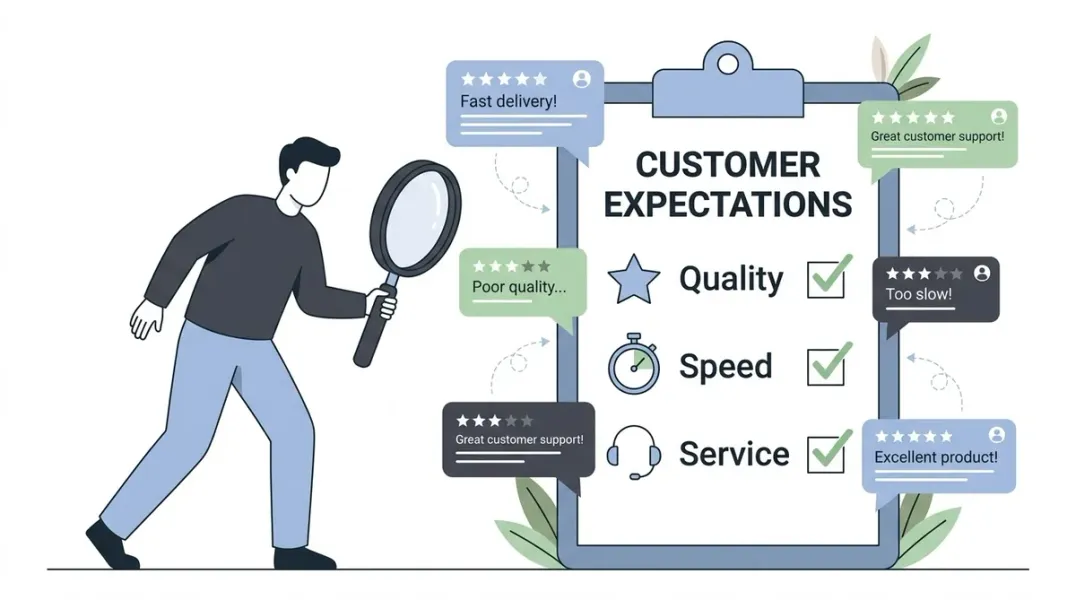
Your competitors’ reviews are not just feedback about them. They are a running commentary on what customers in your market expect—and where those expectations are being met or broken. Read them closely enough, and you will find a blueprint of unmet needs waiting to be addressed.
The research is clear on the value of this approach. Online reviews have become a primary source for identifying customer requirements and quality characteristics, offering insights that questionnaires and focus groups often miss because they capture what customers voluntarily say rather than what researchers ask . A growing body of academic work confirms that user-generated content—including Google reviews—is increasingly seen as a valuable source of insight into customer needs and satisfaction .
For local businesses, this is practical intelligence. When a competitor’s customers repeatedly complain about the same thing, that complaint is a public record of an expectation that is not being met. When they praise something, that praise reveals what your market values most. This guide shows you how to read those signals and translate them into a clearer understanding of what your customers actually expect.
Traditional customer research has a fundamental limitation: it asks people to predict what they will want or recall what they wanted. Reviews capture something different. They are written in the moment, after a real experience, using the customer’s own language.
Research comparing focus groups with online reviews found that the two sources yield different types of insight. Focus groups are better for exploring radical innovations and imagining possibilities. Online reviews excel at capturing detailed, timely insights about incremental improvements—the specific fixes and refinements that make a real difference in daily customer experience . Reviews are often written after a particularly delightful or unpleasant experience, which makes them especially rich in emotional detail about what mattered most .
This is why competitor reviews are so valuable for understanding expectations. They show you what customers notice, what they value, and what they cannot tolerate—all in their own words.
The Universal Expectations Hidden in Negative Reviews
Across industries, the complaints that drive customers away from competitors follow remarkably consistent patterns. Understanding these patterns tells you what customers expect from any business in your market, including yours.
Expectation 1: Transparent Pricing
Pricing complaints dominate negative reviews in service industries. A study of 3,708 negative plumbing reviews found that pricing transparency appeared in 51.5% of negative reviews, with 62.3% raising at least one money-related complaint . The pattern holds across categories. Customers do not simply want low prices. They want to understand what they will pay, why they are paying it, and whether they are being treated fairly.
The lesson for your business: If your competitors’ reviews are full of pricing surprises, lead with transparency. Mention upfront estimates, no hidden fees, and clear communication about costs. Customers are actively looking for this signal.
Expectation 2: Reliable Communication
Communication failures are the other universal complaint. In competitor reviews, customers describe no-shows, unanswered calls, missed updates, and a general sense that no one is paying attention. These complaints appear regardless of whether the actual service quality was good or bad.
The lesson: Customers expect to be kept informed. They want to know when you are coming, what is happening, and what comes next. A business that communicates proactively differentiates itself immediately, even if its technical work is identical to competitors.
Expectation 3: Speed and Responsiveness
Customers expect fast responses to their inquiries and quick resolution of their issues. In the hospitality sector, research shows that two-thirds of consumers expect a response within a few hours, and only 14% will tolerate waiting longer than a day . Slow responses damage both repeat bookings and reputation.
The lesson: If competitors’ reviews mention slow responses, prioritize speed. Answer calls, reply to messages, and confirm appointments promptly. Speed is a differentiator that costs nothing but attention.
Expectation 4: Being Known, Not Just Marketed To
Consumers are increasingly looking for personal relevance from local businesses. They want businesses to recognize their habits without being intrusive—to feel remembered, not harvested. As one industry analysis put it, “Businesses that build consistent, personal touch points turn casual customers into regulars, and regulars into advocates” .
The lesson: Read competitor reviews for mentions of feeling like a stranger, being treated like a number, or receiving generic communications. These complaints reveal an expectation for personal recognition that many businesses fail to meet.
What Praise Reveals About Market Standards
Negative reviews tell you what customers cannot tolerate. Positive reviews tell you what they value—and what they have come to expect as a baseline.
When customers consistently praise a competitor for the same thing, that thing is no longer a differentiator. It is a requirement. Research on the Kano model of customer satisfaction explains this dynamic: some attributes are “must-be qualities” that cause dissatisfaction when missing but do not increase satisfaction when present. Others are “attractive qualities” that delight when delivered but do not cause dissatisfaction when absent .
In competitive markets, attractive qualities become must-be qualities over time. What delighted customers five years ago—same-day service, online booking, text updates—is now expected as standard.
The practical implication: Read competitor reviews to identify what customers are currently praising. If everyone in your market is being praised for a particular attribute, you need to match it. If no one is being praised for something you can deliver, that is your opportunity to differentiate.
Decoding Expectations by Industry
Review patterns vary by industry, and understanding your category’s specific expectations helps you target the right improvements.
Service Businesses (Plumbing, HVAC, Electrical)
The dominant themes are communication and pricing transparency. In the plumbing study, pricing complaints (51.5%) and communication issues dominated negative reviews, while technical failures were rare—only 1.2% of electrician complaints described a technical failure with no other process-related complaint . Customers judge these businesses primarily on how they are treated, not just on whether the work is done correctly.
Hospitality and Food Service
Hygiene ratings and review volume are the top factors influencing revisits. According to industry research, 31% of consumers say a good hygiene rating would make them more likely to return, while 27% cite lots of positive online reviews and 23% cite a high star rating . The expectation is not just good food—it is a clean, well-reviewed establishment.
Retail and Local Shops
Consumers expect affordability and quality, but also connection. Square’s 2026 Local Economy Report found that 65% of customers rank affordability as the main reason for returning, but 56% highlight the importance of knowledgeable and attentive staff in making a local business memorable . The expectation is value plus human connection.
Turning Expectation Insights Into Strategy
Identifying expectations is only useful if you act on them. Here is how to translate competitor review analysis into concrete improvements.
Step 1: Build an Expectation Map
For each competitor you monitor, categorize their reviews into themes: pricing, communication, speed, quality, staff, and personal recognition. Note the frequency of each theme in positive versus negative reviews. This map shows you what customers in your market care about most.
Step 2: Identify Your Gaps and Strengths
Compare your own reviews to the expectations revealed by competitor analysis. Where are you meeting expectations? Where are you falling short? Where could you exceed expectations in a way competitors are not?
Step 3: Prioritize Must-Be Qualities
Before pursuing attractive qualities, ensure you are meeting the baseline. If competitors’ reviews reveal that customers expect transparent pricing and your business is vague about costs, fix that first. Attractive qualities cannot compensate for missing must-be qualities.
Step 4: Communicate Your Differentiators
Once you identify an expectation you can meet better than competitors, make it visible. Mention it in your Google Business Profile description, your website, and your review responses. If you excel at communication, say so. If you are known for transparent pricing, say so. The expectation gap in competitor reviews is your marketing message.
Step 5: Monitor Continuously
Customer expectations evolve. What was an attractive quality last year may be a must-be quality today. Set up ongoing monitoring of competitor reviews—monthly or quarterly—to track shifts in what customers praise and complain about. The patterns will tell you when expectations are changing.
The Meta-Lesson: Expectations Are About Experience
The most important insight from competitor review analysis is that customers judge businesses primarily on the experience surrounding the service, not the service itself. The plumbing study found that 94.1% of negative reviews described business process failures—pricing confusion, communication breakdowns, scheduling delays—rather than technical failures .
This is good news for small businesses. You do not need to be the most technically skilled competitor in your market to win. You need to be the most reliable, transparent, and communicative. Those are qualities anyone can deliver with intention and discipline.
Conclusion
Competitor reviews are a window into what your customers expect, what they value, and what they will not tolerate. The patterns are consistent across industries: transparent pricing, reliable communication, speed, and personal recognition are the expectations that matter most. Businesses that meet these expectations win. Businesses that ignore them lose customers to competitors who understand what the market actually wants.
The work is straightforward. Read competitor reviews with intention. Categorize the themes. Identify the gaps. Then act on what you learn. The intelligence is already there, written by real customers describing real experiences. All you have to do is listen.
Call to Action
Ready to decode what your market expects? Start by pulling the last 30 reviews from your three closest competitors. Categorize them by theme—pricing, communication, speed, quality, staff. The patterns will tell you exactly where the opportunity lies.
Download our Customer Expectation Analysis Template to structure your findings and prioritize improvements. Or contact our local SEO team to build a complete competitor intelligence system for your business. Your customers are telling you what they want—make sure you are listening.
FAQs
Why are competitor reviews better than surveys for understanding expectations?
Reviews capture what customers voluntarily say after real experiences, in their own language. Surveys ask people to predict or recall what they want, which is less reliable. Research shows reviews are especially valuable for identifying incremental improvements and specific pain points that drive satisfaction or dissatisfaction .
What are the most common complaints in competitor reviews?
Across industries, pricing transparency and communication failures dominate negative reviews. Speed and responsiveness also appear frequently. Technical failures are surprisingly rare—most complaints are about how the business is run, not the core service .
What do positive competitor reviews reveal?
Positive reviews show what customers value and what they have come to expect as a baseline. When everyone in your market is praised for the same thing, that thing is no longer a differentiator—it is a requirement. Positive reviews also reveal opportunities to exceed expectations in areas competitors are not addressing.
How often should I analyze competitor reviews?
Monitor continuously—monthly or quarterly—because customer expectations evolve. What was an attractive quality last year may be a must-be quality today. Regular analysis helps you track shifts in what customers praise and complain about, so you can adapt before competitors do.
How do I turn expectation insights into action?
Build an expectation map by categorizing competitor reviews into themes. Compare your own reviews to identify gaps and strengths. Prioritize must-be qualities (transparent pricing, reliable communication) before pursuing attractive qualities. Then communicate your differentiators in your Google Business Profile, website, and review responses.
Internal & External Links
Internal Links
- How to Monitor Competitor Google Reviews and Find Market Opportunities (Topic 66)
- How to Turn Common Customer Complaints Into Local SEO Opportunities (Topic 68)
- The Complete Local SEO Review Response Strategy for Small Businesses (Topic 65)
- How Google Maps Reviews Influence Customer Buying Decisions (Topic 62)
External Sources
- ScienceDirect: Data-driven redefinition of quality attributes: https://www.sciencedirect.com/science/article/abs/pii/S1567422326000475
- IEEE: AI and Big Data for Customer Review Analysis: https://xplorestaging.ieee.org/document/11135275
- NielsenIQ/CGA Reputation Report: https://develop.nielseniq.com/wp-content/uploads/sites/4/2025/09/CGA_0581-Reputation-Report-1.pdf
- Square 2026 Local Economy Report (via Small Business Trends): https://smallbiztrends.com/local-businesses-thrive-as-consumers-seek-value-and-connection-says-square-report/
Grow Your Google Maps Ranking on Autopilot
Stop spending hours every week manually replying to customer reviews and writing Google posts. Busirank automates your Google Business Profile to boost your local SEO rankings and turn searchers into paying clients.

 Busirank Team
