 Busirank Team
Introduction
Every local business owner has heard the same advice: invest in marketing. Rarely does anyone explain what to do when there is no budget to invest. You know you need more customers. You also know that a $3,000 monthly agency retainer, a stack of paid subscriptions, and a full-funnel ad campaign are not realistic right now.
The good news is that local marketing has an unusual advantage: many of the highest-return activities are free or nearly free. Your Google Business Profile, your reviews, your existing customers, your community relationships, and the content you already know how to create all cost more time than money—and for local businesses, they often outperform paid channels that larger competitors can outbid you on.
This guide explains how to build a low-budget local marketing strategy that actually works. You will learn what to prioritize first, which free channels deliver the most return, how to spend small amounts effectively, and how to avoid the common mistakes that waste limited budgets.
1. Start With Your Highest-Return, Zero-Cost Asset
Before spending a single dollar, optimize the asset that costs nothing and influences the most local decisions: your Google Business Profile.
For most local businesses, the GBP is the highest-return marketing surface available. It appears in local search results, Google Maps, and AI-generated answers. It displays your hours, phone number, reviews, photos, and services—everything a customer needs to decide whether to contact you.
The free optimization checklist:
- Complete every field. Categories, services, attributes, hours, service area, and a clear business description.
- Add photos regularly. Exterior, interior, team, and work examples. Profiles that look active build more trust.
- Enable and monitor calls and messages. Respond quickly.
- Post updates weekly or biweekly. Posts are free and signal an active business.
- Respond to every review—positive and negative.
- Keep hours accurate, including holidays and seasonal changes.
Why it matters: A complete, active profile costs nothing but time, and it influences the majority of local search decisions. If you do only one thing this month, do this.
2. Build a Review Engine—the Cheapest Trust Signal You Have
Reviews are the most powerful trust signal in local search, and they cost nothing except a consistent ask.
A simple review system:
- Ask at the right moment. Immediately after a positive service experience, when the customer is most satisfied.
- Make it easy. Send a direct link by text or email. Do not make customers search for your profile.
- Ask in person. A brief, genuine request from a staff member converts well.
- Respond to every review. Professional responses build trust and show you are engaged.
- Track review velocity. Aim for a steady flow of new reviews rather than a large number of old ones.
Benchmark to aim for: Five new Google reviews per month is a realistic and impactful target for most small local businesses.
Fix: Train staff to recognize the right moment and ask naturally. Review generation is a habit, not a campaign.
3. Use Your Existing Customers as a Free Marketing Channel
Your happiest customers are the cheapest source of new business you have. Referrals and word of mouth cost nothing to generate if you build a simple system for them.
Free and low-cost referral tactics:
- Ask for referrals directly. After a positive experience, say: “If you know anyone who needs this, we’d love to help.”
- Make sharing easy. Give customers a simple way to forward your information—a text link, a card, or a shareable message.
- Reward referrals modestly. A discount, a free add-on, or a small thank-you is enough to motivate action.
- Follow up with past customers. A simple check-in message costs nothing and often generates repeat business.
- Ask for reviews and referrals together. Both come from the same moment of satisfaction.
Fix: Build referral requests into your existing follow-up process. Do not create a separate program with overhead—use the moments you already have.
4. Claim and Clean Up Free Directory Listings
Citations—your business name, address, and phone number (NAP) listed consistently across directories—are a foundational local ranking signal and cost nothing but time.
Priority free listings:
- Google Business Profile
- Bing Places
- Apple Maps Connect
- Yelp
- Facebook Business Page
- Industry-specific directories
- Local chamber of commerce and community directories
The critical rule: Consistency matters more than volume. Your business name, address, and phone number must match exactly across every listing. Inconsistent listings reduce trust signals for search engines and AI systems alike.
Fix: Audit your top ten listings and fix any inconsistencies. Then add a few new listings per month in relevant directories.
5. Publish Local Content That Earns Visibility
Content is the original low-budget marketing channel. It costs time, not money, and it compounds over months and years.
High-return content for local businesses:
- Service pages that clearly explain what you do, who you serve, and where.
- Local guides relevant to your service area—seasonal tips, neighborhood information, local regulations.
- FAQ content answering the questions customers actually ask.
- Customer stories from nearby neighborhoods.
- Location pages for each city or area you serve, with genuinely unique content.
What to avoid: Publishing generic content that could apply to any business anywhere. Local specificity is what makes content valuable—and what makes it citable by AI systems.
Fix: Commit to one useful piece of local content per month. One well-written, locally specific page is worth more than ten thin generic posts.
6. Use Free Tools to Understand What Is Working
You cannot improve what you do not measure—and measurement does not require a paid platform.
Free tools worth using:
- Google Analytics 4: Website traffic, conversions, and engagement.
- Google Search Console: Search queries, impressions, and click-through rates.
- Google Business Profile insights: Views, calls, direction requests, and messages.
- Google Trends: Seasonal demand patterns and local interest.
- Google PageSpeed Insights: Site speed and mobile performance.
- Ubersuggest or Google Keyword Planner: Basic keyword research.
Fix: Set up GA4 and Search Console if you have not already. Review GBP insights monthly. These four data sources cover most of what a small local business needs to know.
7. Spend Small Amounts Where They Compound
When you do have a small budget, spend it where it produces the most reliable return. For local businesses, the highest-leverage low-budget spends are usually:
Google Business Profile posts promotion (free) and Local Services Ads (where eligible). For home services, Local Services Ads can generate qualified leads on a pay-per-lead basis with lower risk than broad display campaigns.
Hyper-local social ads with tight targeting. A small budget spent on a tightly defined geographic radius can outperform a larger budget spread across a wide area.
Review generation tools. Inexpensive software that automates review requests can increase review velocity significantly for a modest monthly cost.
Call tracking. A small monthly cost that makes phone conversions visible—often the most important conversion for local businesses.
What to avoid with a limited budget:
- Broad awareness campaigns with no clear conversion goal.
- Multiple simultaneous experiments that split a small budget too thin to measure.
- Expensive agency retainers before you understand your own numbers.
- Paid tools you will not use consistently.
Fix: Concentrate your budget on one or two channels with clear conversion goals, and measure them properly before adding more.
8. Prioritize Retention Over Acquisition
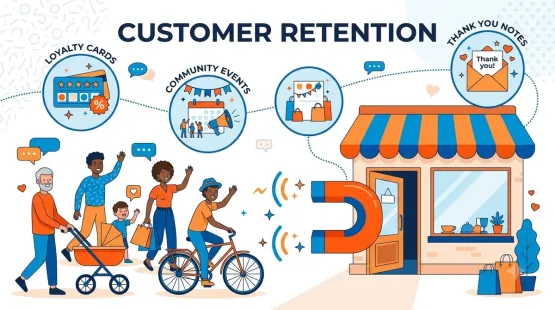
When budget is tight, the cheapest customer is the one you already have. Retention marketing often delivers higher returns than acquisition for local businesses.
Low-cost retention tactics:
- Follow-up after service. A simple check-in message costs nothing.
- Seasonal reminders. Remind customers when it is time for repeat service.
- Birthday or anniversary offers. Small gestures build loyalty.
- A simple loyalty program. Even a paper punch card can work.
- A monthly or quarterly email newsletter with useful local content.
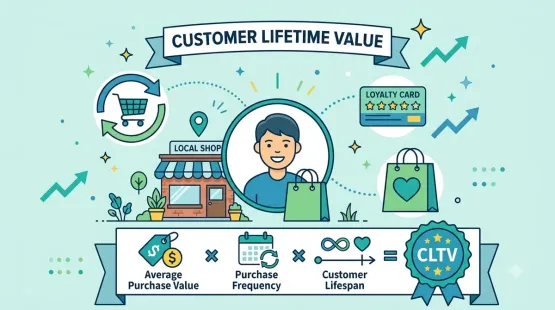
Why it matters: A repeat customer costs nothing to acquire and often spends more over time. When budget is limited, investing in the customers you already have is the highest-return decision available.
9. Avoid the Common Budget-Wasting Mistakes
Limited budgets fail for predictable reasons. Watch for these.
Common mistakes:
- Spreading a small budget across too many channels. Concentration beats diversification when the budget is small.
- Chasing vanity metrics. Impressions and likes do not pay bills. Track calls, form submissions, and bookings.
- Ignoring the free assets. Many businesses spend money on ads while leaving their Google Business Profile incomplete.
- Not measuring anything. Without measurement, you cannot tell whether spend is working.
- Buying tools before building habits. A subscription does not create a marketing system; consistency does.
- Competing on price with larger competitors. Compete on service, responsiveness, and local relationships instead.
Fix: Before spending, confirm that your free assets—GBP, reviews, citations, and basic tracking—are in place. Then spend on one channel at a time.
10. Build a Simple 90-Day Plan
A limited budget works best with a focused plan. Here is a practical 90-day structure.
Month 1: Foundation
- Complete and optimize your Google Business Profile.
- Set up GA4 and Search Console.
- Audit your top ten citations and fix inconsistencies.
- Start a consistent review request process.
Month 2: Content and Follow-Up
- Publish one locally specific service or location page.
- Set up a simple follow-up message for past customers.
- Ask for referrals from recent satisfied customers.
- Review your GBP insights and adjust.
Month 3: Small, Measured Spend
- Choose one paid channel with a clear conversion goal.
- Set a small, defined budget.
- Track cost per lead and compare it to your break-even point.
- Review results and decide whether to continue, adjust, or stop.
Fix: Write the plan down and review it at the end of each month. A simple plan executed consistently beats a complex plan abandoned after two weeks.
Conclusion
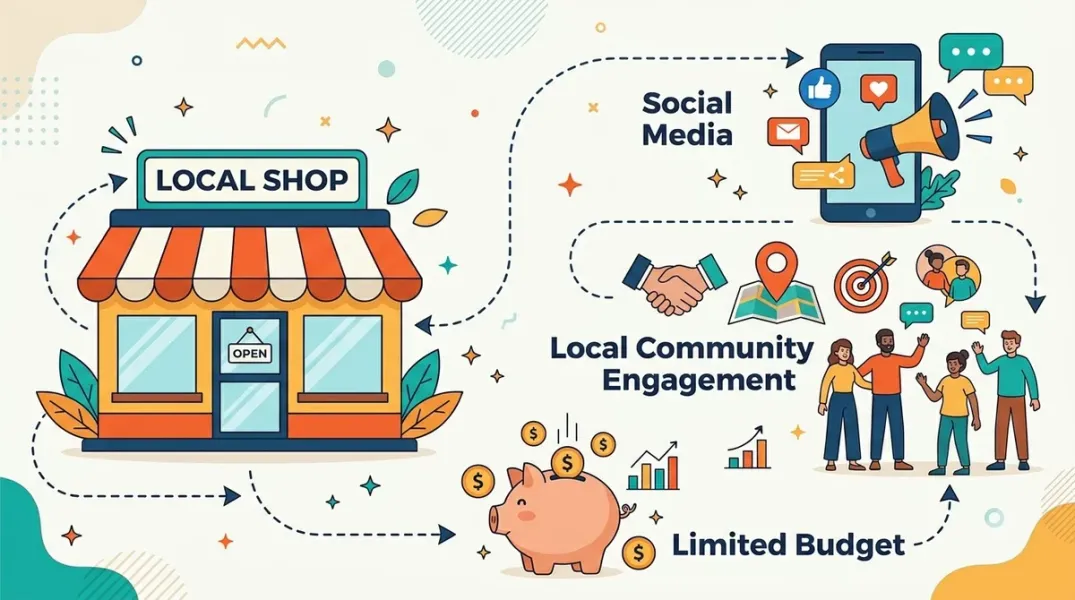
A limited budget is not a barrier to effective local marketing. It is a constraint that forces focus—and focus is often what small businesses need most. Your Google Business Profile, reviews, existing customers, citations, and local content cost more time than money and consistently deliver among the highest returns in local marketing.
Start with the free assets. Build habits before buying tools. Concentrate small budgets on one or two measurable channels. Track calls, form submissions, and bookings rather than impressions. And remember that retention is often the cheapest growth available.
The businesses that win with limited budgets are not the ones that spend the most. They are the ones that do the fundamentals consistently—and measure what matters.
Call to Action
Ready to grow without a big budget? Start this week with the free fundamentals: complete your Google Business Profile, ask five recent customers for reviews, and set up basic conversion tracking. If you want a focused 90-day plan built around your actual budget, contact us for a free low-budget marketing consultation and get a prioritized roadmap for the next three months.
FAQs
Q1: What is a low-budget local marketing strategy?A: It is a focused plan that prioritizes free and low-cost channels—Google Business Profile, reviews, referrals, citations, and local content—and spends limited budget on one or two measurable channels rather than spreading it thin.
Q2: What should I do first with no marketing budget?A: Complete and optimize your Google Business Profile, set up free tracking in GA4 and Search Console, fix citation inconsistencies, and start a consistent review request process.
Q3: How much should a small business spend on local marketing?A: There is no fixed number. Many small businesses start with 5–10% of revenue and adjust based on results. What matters most is measuring cost per lead against your break-even point before scaling spend.
Q4: Is paid advertising worth it for a small local business?A: It can be, but only after the free fundamentals are in place and you can measure results. Concentrate a small budget on one channel with a clear conversion goal, and compare cost per lead to your customer lifetime value.
Q5: How long does a low-budget local marketing strategy take to work?A: Free and content-based channels typically take three to six months to show meaningful results. Reviews and GBP improvements can show earlier impact. Set a 90-day plan and review results monthly.
Grow Your Google Maps Ranking on Autopilot
Stop spending hours every week manually replying to customer reviews and writing Google posts. Busirank automates your Google Business Profile to boost your local SEO rankings and turn searchers into paying clients.
 Busirank Team