 Busirank Team
Introduction
Acquiring a new customer is expensive. Studies consistently show that keeping an existing customer costs far less than acquiring a new one. Yet many local businesses pour most of their marketing budget into attracting new faces while paying little attention to the customers they already have.
For local businesses, retention is especially powerful. Your customers live nearby. They can visit again, refer friends, and become loyal advocates. A strong local customer retention strategy can transform a one-time buyer into a regular who spends more over time and brings others with them.
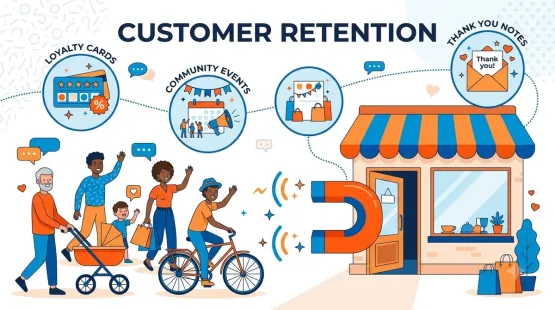
This guide explains how to build a customer retention strategy using local marketing. You will learn how to measure retention, create loyalty programs, use local content and events, personalize follow-up, and build a system that keeps customers coming back.
Body
1. Understand Why Customer Retention Matters for Local Businesses
Retention is the percentage of customers who continue to do business with you over time. It directly affects revenue, profitability, and stability.
Why retention matters:
- Lower cost: Retaining a customer is cheaper than acquiring a new one.
- Higher spend: Repeat customers tend to spend more over time.
- Predictable revenue: Loyal customers provide a stable base of income.
- Referrals: Satisfied repeat customers are more likely to refer others.
- Local reputation: Long-term customers strengthen your local brand and word-of-mouth.
Fix: Treat retention as a core business metric. Track repeat purchase rate, customer lifetime value, and churn. Review them regularly alongside acquisition metrics.
2. Measure Your Current Retention Rate
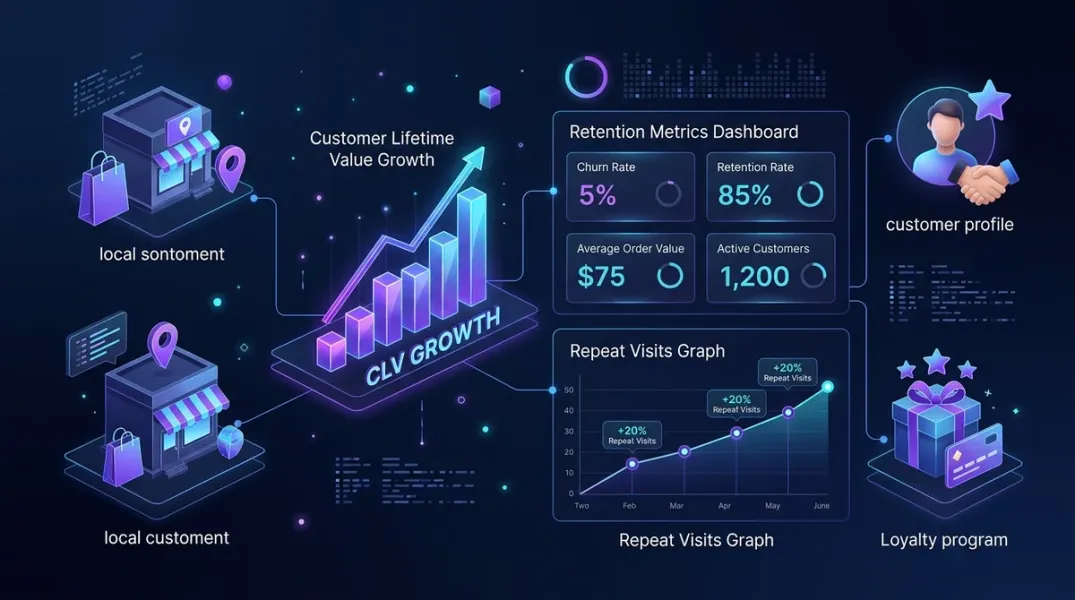
Before improving retention, you need to know where you stand. Start by measuring basic retention metrics.
Key metrics to track:
- Repeat customer rate: The percentage of customers who return.
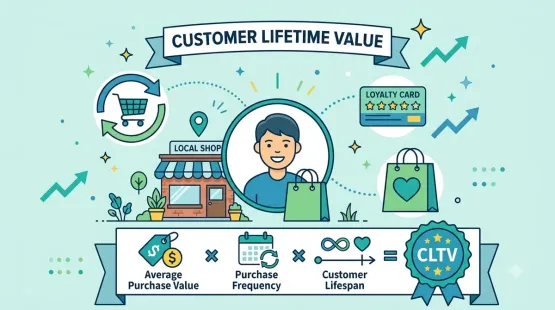
- Customer lifetime value (CLV): The total revenue a customer generates over their relationship with you.
- Churn rate: The percentage of customers who stop buying.
- Purchase frequency: How often customers buy or visit.
- Average order value: The average amount spent per transaction.
- Time between visits: The typical gap between repeat purchases.
Fix: Use your CRM or point-of-sale system to calculate these metrics. Review them monthly or quarterly. Identify trends and set realistic improvement goals.
3. Segment Customers by Value and Behavior
Not all customers are equal. Some are loyal regulars. Others are occasional buyers or at-risk customers. Segmentation helps you focus your retention efforts where they matter most.
Common retention segments:
- Loyal customers: Frequent, high-value customers who should be rewarded.
- Potential loyalists: Recent customers who could become regulars with the right follow-up.
- At-risk customers: Customers who used to buy often but have slowed down.
- Inactive customers: Customers who have not purchased in a long time.
- High-value occasional customers: Customers who spend a lot but infrequently.
Fix: Add simple tags or fields in your CRM to track customer status. Update them as behavior changes. Use these segments to tailor your retention messaging.
4. Build a Local Loyalty Program
A loyalty program rewards repeat business and gives customers a reason to choose you again. Local businesses can create loyalty programs that feel personal and community-focused.
Loyalty program ideas for local businesses:
- Punch cards or digital stamps: Buy 10, get one free.
- Points-based rewards: Earn points for purchases and redeem for discounts or services.
- Tiered rewards: Unlock better benefits as customers spend more.
- Birthday and anniversary offers: Reward customers on special occasions.
- Referral bonuses: Reward customers for bringing in friends.
- Local partner rewards: Partner with nearby businesses for cross-promotions.
Fix: Keep the program simple. Customers should understand how it works and how to redeem rewards. Promote it at the point of sale, on receipts, and on your website.
5. Personalize Your Follow-Up
Personalized follow-up shows customers you remember them and value their business. It also keeps you top of mind between visits.
Personalization ideas:
- Thank-you messages after a purchase or visit.
- Seasonal reminders relevant to their past purchases.
- Recommendations based on previous services.
- Birthday and anniversary messages.
- Check-in messages after a service to confirm satisfaction.
- Reorder or refill reminders.
Fix: Use your CRM to automate personalized messages. Personalize with the customer’s name, location, and purchase history. Do not over-automate—keep messages relevant and helpful.
6. Use Local Content to Stay Top of Mind
Content keeps your business relevant between visits. Local content is especially effective because it connects your business to the community your customers care about.
Local content ideas for retention:
- Seasonal guides relevant to your service.
- Local event calendars and community news.
- Tips and how-tos related to your products or services.
- Customer stories from nearby neighborhoods.
- Local deals and promotions.
- Neighborhood-specific updates.
Fix: Publish a monthly newsletter or blog update with local content. Share it on your website and social channels. Include a clear call to action in each piece.
7. Host Local Events and Workshops
Events bring customers together and create memorable experiences. They also give customers a reason to return and bring friends.
Event ideas for local businesses:
- Workshops or classes related to your service.
- Seasonal celebrations or open houses.
- Customer appreciation days.
- Local charity or community events.
- Product demonstrations or tastings.
- Wellness or fitness sessions if relevant.
Fix: Plan events that are valuable to your customers and aligned with your business. Promote them through email, social media, and in-store signage. Follow up with attendees afterward.
8. Build a Strong Online Presence That Supports Retention
Your online presence should reinforce the relationship with existing customers, not just attract new ones.
Retention-focused online presence:
- A website with a customer portal or account area.
- Email newsletters with useful content.
- Social media that highlights customers and local community.
- Google Business Profile posts with updates and offers.
- Review responses that acknowledge loyal customers.
- Online booking and appointment reminders.
Fix: Make it easy for customers to stay connected. Offer multiple ways to stay in touch—email, SMS, social, and in-person. Respect preferences and consent.
9. Respond to Feedback and Resolve Problems Quickly
Retention depends heavily on how you handle problems. Customers who have a bad experience and receive a fast, fair resolution are often more loyal than those who never had a problem.
Feedback and resolution best practices:
- Ask for feedback after purchases or services.
- Respond to negative feedback quickly and professionally.
- Apologize sincerely and offer a solution.
- Follow up to confirm the issue is resolved.
- Track common complaints and fix root causes.
Fix: Make it easy for customers to give feedback. Monitor reviews, surveys, and direct messages. Have a clear process for resolving complaints.
10. Train Your Team to Deliver Consistent Local Experiences
Retention is not just a marketing function. It is delivered by every customer interaction—phone calls, in-store visits, service appointments, and follow-ups.
Team training focus areas:
- Greeting and acknowledging regular customers.
- Remembering names and preferences where appropriate.
- Handling complaints calmly and professionally.
- Following up after service.
- Asking for reviews and referrals at the right time.
- Consistent communication across channels.
Fix: Train staff on customer service basics and your retention goals. Recognize and reward staff who create great customer experiences.
11. Use Referral Programs to Strengthen Retention
A referral program rewards existing customers for bringing in new ones. It also strengthens retention because customers who refer are more invested in your business.
Referral program ideas:
- Give a discount or credit to both the referrer and the new customer.
- Offer tiered rewards for multiple referrals.
- Create a simple sharing mechanism through email or text.
- Recognize top referrers publicly, with permission.
Fix: Keep the referral process simple. Promote it in your newsletters, receipts, and in-store signage. Track referrals and reward promptly.
12. Measure and Improve Retention Over Time
Retention is an ongoing process. Track results and adjust your strategy based on what works.
What to track:
- Repeat customer rate over time.
- Loyalty program participation and redemption.
- Email open and click rates.
- Event attendance and follow-up conversions.
- Referral volume and conversion.
- Customer feedback scores.
- Churn rate and reasons for churn.
Fix: Review retention metrics quarterly. Test one or two new retention tactics at a time. Keep what works and stop what does not.
Conclusion
Customer retention is one of the most cost-effective ways for local businesses to grow. By measuring retention, segmenting customers, building loyalty programs, personalizing follow-up, using local content, hosting events, and training your team, you can turn one-time buyers into loyal local customers.
A strong local customer retention strategy does not require a large budget. It requires consistency, attention to customer experience, and a clear understanding of what your best customers value.
Call to Action
Ready to keep more of your local customers? Start by measuring your repeat customer rate and identifying your most valuable segments. If you want help building a retention strategy tailored to your business, contact us for a free customer retention consultation and get a practical plan for your next steps.
FAQs
Q1: What are local customer retention strategies?A: Local customer retention strategies are tactics that encourage customers in your area to keep buying from you. Examples include loyalty programs, personalized follow-up, local events, and community-focused content.
Q2: How do I measure customer retention?A: Track repeat customer rate, churn rate, purchase frequency, customer lifetime value, and average order value. Use your CRM or point-of-sale system to calculate these metrics regularly.
Q3: What is a good retention rate for a local business?A: Retention rates vary widely by industry. Many local service businesses aim for 60–80% annual retention. The key is to track your rate over time and improve it consistently.
Q4: Do loyalty programs really work for small businesses?A: Yes, when they are simple, relevant, and well-promoted. Loyalty programs work best when rewards are easy to understand and customers see clear value.
Q5: How can I re-engage inactive customers?A: Use win-back campaigns with personalized offers, reminders of past purchases, and a clear reason to return. Keep messages helpful, not pushy, and make it easy to opt out.
Grow Your Google Maps Ranking on Autopilot
Stop spending hours every week manually replying to customer reviews and writing Google posts. Busirank automates your Google Business Profile to boost your local SEO rankings and turn searchers into paying clients.
 Busirank Team