 Busirank Team
Introduction
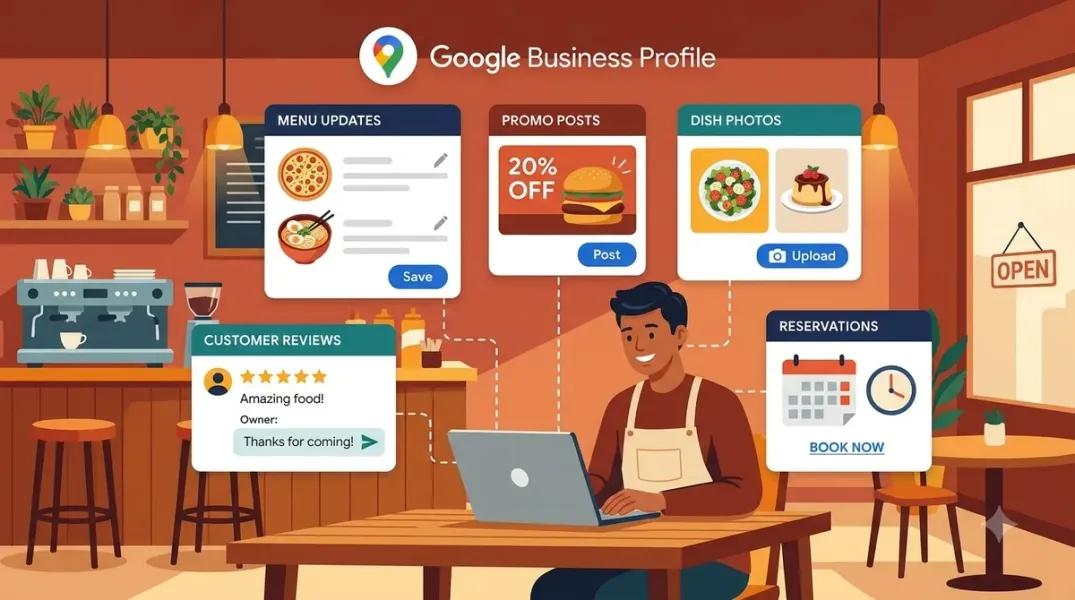
A restaurant’s Google Business Profile is doing two jobs at once, and most operators are running them from two different places—or not running them at all. The reviews build trust with every diner who checks the star rating before booking. The promotional posts signal that the kitchen is open, the specials are fresh, and the room is worth walking into. One is reputation. The other is demand. They feed each other, and when they are managed in separate tools by separate people—or by the same overwhelmed owner at 11 PM—both suffer.
The operational cost of that fragmentation is now documented. A regional restaurant chain with 47 locations spent 14 hours every Monday morning copying the same week-of-events post into each Google Business Profile. That is 728 hours a year—two months of one person’s full-time work, lost to copy-paste. Meanwhile, the reviews piled up in a different tab, answered late or not at all, because the person doing the posting was not the person watching the inbox.
Restaurant Google Business Profile management from one platform solves both problems at once. It puts reviews and promotional posts in the same workspace, so the team responding to a one-star review about a slow Friday night is the same team scheduling the post that announces the new happy hour menu. This guide covers the workflow, the platforms built for it in 2026, and the results restaurants are seeing when they stop juggling two jobs.
The Fragmented Workflow Problem (and Why It Costs More Than Time)
Most restaurants do not have a review problem or a posting problem. They have a coordination problem that produces both. The owner checks reviews on a phone, posts a special from a laptop, and answers a Facebook comment from a third device—none of which talk to each other. The result is predictable: reviews get answered late, posts go out sporadically, and the profile looks like a restaurant that is not paying attention.
The scale of the opportunity is significant. Consumers use Google to read reviews of local businesses more than any other platform, and only 4% never read them. A one-star rating increase produces a measurable revenue lift, driven primarily by independent restaurants rather than chains. The review inbox and the post calendar are not separate marketing chores. They are the two halves of the same local demand loop.
The platforms that solve this treat Google Business Profile as a first-class channel rather than an afterthought. Sked Social’s approach is the clearest articulation: posts, offers, events, and reviews all run in the same workflow as Instagram and Facebook, per location, with a unified inbox and a multi-location rollup. The review reply and the promotional post are not two products. They are two tabs in the same workspace.
What “One Platform” Actually Means for a Restaurant
A platform that coordinates reviews and posts does four things that separate tools cannot.
A unified inbox for every conversation. Google reviews land alongside Instagram DMs, Facebook comments, and messages, so nobody has to keep a separate console open to answer them. Sked Social’s inbox drafts on-voice review replies inside the same queue where social comments are handled, with 94% CSAT across 10,000+ marketers. The restaurant replies per location, holds one voice across every listing, and hands each conversation to the person who runs that location.
Post scheduling with the right post types. A restaurant does not only publish standard updates. It runs Offer posts for specials, Event posts for live music and holiday dinners, and Update posts for menu changes. Sked Social supports all four post types—Standard, Offer, Event, and Update—scheduled per location from the same composer as every other channel.
AI drafting in the restaurant’s voice, not a generic bot. Restaurant Velocity trains its review replies on the restaurant’s past replies, website language, and social captions, so the draft sounds like the owner wrote it. BoringLocal drafts responses in the business’s tone, lets the operator review and edit, and supports automatic replies for the locations that want them.
A multi-location rollup that does not hide the failing branch. Every location’s Google Business account sits in one workspace: HQ oversees performance while location managers only see their own. That structure is what makes a 47-location chain manageable—and what makes a single underperforming restaurant visible before its rating drops.
The Workflow: Reviews First, Then Posts
The sequencing that works for restaurants is reviews first, then posts, then locations—the order Sked Social uses, and the order that reflects how diners actually decide.
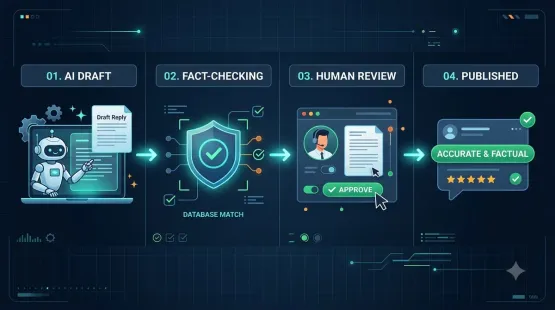
Step 1 — Triage the reviews. The inbox surfaces new reviews across every location. Positive reviews get a fast, on-brand acknowledgment—often AI-drafted and one-click approved. Negative reviews are held for human review, because a reply about a bad dish or a bad night needs judgment, not automation. Restaurant Velocity defaults every new account to Manual mode for exactly this reason: nothing publishes until the operator approves it.
Step 2 — Turn the review signal into the post. A cluster of reviews praising a new dish is a promotional post waiting to be written. A cluster of complaints about wait times is a post about a new reservation system. The unified workspace makes that connection visible, because the review inbox and the post composer are side by side.
Step 3 — Schedule the promotional rhythm. The four-week content rhythm that works for restaurants is simple: week one, a service or menu spotlight; week two, a review highlight or customer story; week three, an educational post (a sourcing note, a chef’s technique); week four, an offer or event. Offer and Event posts carry a date range and stay visible until the end date, while Update posts fade after about a week. Scheduling the month in one sitting keeps the profile active without a daily decision.
Step 4 — Fan the posts across locations with localization. The 47-location chain that cut its posting time from 14 hours to 90 minutes did it by using AI to localize and schedule the same week-of-events post across every profile—with better localization than the manual version had produced. Identical content across 30 locations triggers deduplication penalties and can cut visibility by 30–40%, so the platform has to vary the copy per location while keeping the brand message intact.
Step 5 — Measure both halves together. The report that matters for a restaurant is not “reviews” and “posts” in two columns. It is response rate and response time on the review side, and views, calls, and direction requests on the post side, reported per location with the gap from the group median highlighted.
The Platforms Built for This in 2026
The market has split into unified inbox and scheduling tools, restaurant-specific marketing automation, and all-in-one reputation platforms. The right choice depends on whether the bottleneck is coordination, content, or review volume.
Sked Social is the strongest fit for restaurants that already run social media and want Google Business in the same workflow. It offers AI review replies in the unified inbox, Standard, Offer, Event, and Update post scheduling, and a multi-location rollup where HQ oversees performance and location managers see only their own. Pricing is not listed on the page, but a 14-day trial is available.
Restaurant Velocity is built specifically for restaurant marketing automation. It runs four recurring jobs—visibility (rank grid tracking), trust (on-brand review replies), engagement (social comment inbox), and activity (weekly Google posts and photo captions)—in one queue, with three control modes (Manual, Assist, Auto) that let the owner decide how much ships without approval. Review replies are trained on the restaurant’s real voice, and sensitive reviews stay held for human review. It offers a 14-day free trial.
Storefries Restaurant is a reputation and local marketing platform for restaurants, cafés, QSR brands, and food franchises. It combines review management, reputation monitoring, local search visibility, social media publishing, offer campaigns, team permissions, and analytics in one dashboard. Its published customer results include a 115% increase in reviews, 571% increase in search views, and 605% increase in site visits. It offers a 14-day free trial with no credit card required.
BoringLocal is a mobile-first option for single-location operators. It combines AI review replies, scheduled Google posts, photo management, and performance tracking in one iPhone/iPad app, with a prize-wheel mechanic that invites customers to leave a review after playing a game—review optional and not tied to prize eligibility. It is built for restaurants, salons, garages, and shops, and it lets the owner set AI tone, language, and publishing rules per profile.
Helena (Enrich Labs) is an AI marketing agent positioned for restaurants and hospitality. It posts the special, keeps the Google Business Profile active, answers reviews carefully, and builds local pages, with dated campaigns around festivals, holidays, and seasonal promotions. It is pitched at owner-operators who want the marketing to run while they run the floor, with a 3-day free trial.
Zoho Publish is the platform behind a documented restaurant deployment: Church’s Texas Chicken in Canada uses it to manage 80+ GBP profiles, respond to reviews, and gain deeper insights, with the digital marketing consultant calling it a “game-changer” for managing all locations on Google Business.
For a restaurant group already inside a broader reputation suite, Birdeye, Yext, or SOCi can handle reviews and posts at multi-location scale. For a single independent restaurant, BoringLocal or Restaurant Velocity is likely the narrowest tool that solves the coordination problem without an enterprise subscription.
The Results Restaurants Are Seeing
The evidence is specific and measurable, and it points to the same conclusion across platforms: coordination produces volume, and volume produces demand.
The 47-location restaurant chain cut posting time from 14 hours to 90 minutes per week by moving from manual copy-paste to AI-localized scheduling, with better localization than the manual process had produced.
Storefries Restaurant publishes customer outcomes of 115% more reviews, 571% more search views, and 605% more site visits across its restaurant customer base.
Restaurant Velocity positions its value as replacing the owner-time problem that leaves Google profiles under-managed, with review replies, social comments, and weekly posts running on a cadence the owner controls.
Sked Social reports 94% CSAT across 10,000+ marketers and 90-second average first response from its support team, with a multi-location workspace designed for exactly the HQ-oversight, location-manager model that restaurant groups need.
Conclusion
Coordinating Google reviews and promotional posts from one platform is not a convenience upgrade for restaurants. It is the structural fix for the owner-time problem that leaves profiles under-managed and reviews unanswered.
The workflow has four parts: a unified inbox where reviews sit beside social conversations, AI drafting trained on the restaurant’s real voice rather than a generic template, scheduled post types (Standard, Offer, Event, Update) that keep the profile active without a daily decision, and a multi-location rollup that lets HQ oversee performance while location managers handle their own conversations.
The platforms now support every layer. Sked Social and Zoho Publish handle the unified inbox and multi-location scheduling. Restaurant Velocity and Storefries are built specifically for restaurant marketing automation and reputation. BoringLocal serves the single-location operator who needs reviews and posts in one mobile app. Helena runs the marketing while the owner runs the floor. And the results are measurable: 14 hours to 90 minutes, 115% more reviews, 605% more site visits, and a review inbox that does not wait for someone to remember to open it.
The restaurant does not need two marketing jobs. It needs one platform where both jobs happen.
Call to Action
Audit the gap between your review inbox and your post calendar this week. Open your Google Business Profile and check two things: how many reviews are unanswered, and when the last promotional post went live. If either answer is uncomfortable, the fragmentation is real. Then pick the narrowest platform that closes the gap: Sked Social if you already run social and want Google Business in the same workflow, Restaurant Velocity or Storefries if you want a restaurant-specific queue with AI drafting and post scheduling, or BoringLocal if you are a single-location operator who wants it all on a phone. Start in Manual mode so nothing publishes until you approve it, run it for two weeks, and measure the change in response rate and posting frequency. The goal is not a new tool. It is one workspace where the review and the special are handled by the same person, on the same day.
FAQs
Can I manage Google reviews and promotional posts from one platform?Yes. Platforms like Sked Social, Restaurant Velocity, Storefries, and BoringLocal put review replies and Google post scheduling in the same workspace. Sked Social handles reviews in a unified inbox alongside social conversations and schedules Standard, Offer, Event, and Update posts per location. Restaurant Velocity runs review replies and weekly Google posts in one queue with three control modes.
What is a unified inbox for restaurant reviews?It is a single workspace where Google reviews, Instagram DMs, Facebook comments, and other messages arrive together, so the team does not have to open separate consoles to respond. Sked Social’s unified inbox includes AI-drafted on-voice review replies and lets the restaurant reply per location while holding one voice across every listing.
How do restaurants keep Google Business Profiles active across multiple locations?Use a platform with multi-location rollup and localized post scheduling. The 47-location restaurant chain in theStacc’s case study cut posting time from 14 hours to 90 minutes per week by using AI to localize and schedule the same week-of-events post across every profile. Identical content across locations triggers deduplication penalties and can cut visibility by 30–40%, so localization matters.
What post types should a restaurant schedule on Google Business Profile?Standard posts for general updates, Offer posts for specials and discounts, Event posts for live music and holiday dinners, and Update posts for menu changes. Offer and Event posts stay visible until the date range ends, while Update posts fade after about a week. Sked Social supports all four types scheduled per location.
Should AI auto-reply to restaurant reviews?Use tiered automation. AI can draft and auto-post replies to routine positive reviews, but negative and sensitive reviews should require human approval. Restaurant Velocity defaults new accounts to Manual mode—nothing publishes until the operator approves—and holds sensitive reviews for review even in Auto mode. BoringLocal supports automatic replies as an optional setting.
What results have restaurants seen from coordinating reviews and posts?Storefries Restaurant reports 115% more reviews, 571% more search views, and 605% more site visits for its customers. The 47-location chain cut posting time by over 90%. Sked Social reports 94% CSAT across 10,000+ marketers. The consistent pattern is that coordination produces volume, and volume produces demand.
Which platform is best for a single-location restaurant?BoringLocal is built for single-location operators—restaurants, salons, garages, and shops—with AI review replies, scheduled posts, photo management, and performance tracking in one iPhone/iPad app, plus a prize-wheel review invitation mechanic that keeps the review optional and not tied to prize eligibility. Restaurant Velocity is the stronger choice if the operator wants a restaurant-specific queue with voice-trained AI drafting and a 14-day free trial.
Internal & External Links
Internal links (to other posts in this series):
- How to Build an AI-Powered Review Management Workflow for Healthcare Groups (previous post)
- How to Choose Between Standalone Review Tools and an All-in-One Local SEO Platform (next in series)
- How to Schedule a Month of Google Business Posts in One Sitting
- How to Plan Google Business Profile Content Around Seasonal Promotions
- How to Automate Google Review Responses Without Losing Your Brand Voice
- How to Manage Google Reviews From Multiple Locations in One Dashboard
- How to Choose the Right Call-to-Action for Google Business Profile Posts
- Best Google Business Profile Management Software for Small Businesses in 2026
External links (sources referenced in this article):
- Sked Social — Google Business Profile Scheduler: posts, reviews, GBP: https://skedsocial.com/integrations/google-business-profile
- Restaurant Velocity — Marketing automation for restaurants: https://restaurantvelocity.com/
- Storefries Restaurant — Reputation and Local Marketing Software: https://storefries.com/restaurant.html
- BoringLocal — Business Profile App (App Store): https://apps.apple.com/us/app/boringlocal-business-profile/id6774607118
- theStacc — Multi-Location GBP + AI: The 2026 Management Guide (47-location case study): https://thestacc.com/blog/multi-location-gbp-ai/
- Helena (Enrich Labs) — AI Digital Marketing Agent for Restaurants and Hospitality: https://www.enrichlabs.ai/ai-digital-marketing-agent-restaurants
- Zoho Publish — Business Listing & Review Management Software (Church’s Texas Chicken Canada): https://www.zoho.com/publish/
- BrightLocal — Local Consumer Review Survey 2025 (review usage and revenue impact): https://www.brightlocal.com/research/local-consumer-review-survey/
- Harvard Business School (Luca) — One-star rating increase and restaurant revenue: referenced via Restaurant Velocity
How to Choose Between Standalone Review Tools and an All-in-One Local SEO Platform
Grow Your Google Maps Ranking on Autopilot
Stop spending hours every week manually replying to customer reviews and writing Google posts. Busirank automates your Google Business Profile to boost your local SEO rankings and turn searchers into paying clients.
 Busirank Team