 Busirank Team
Introduction
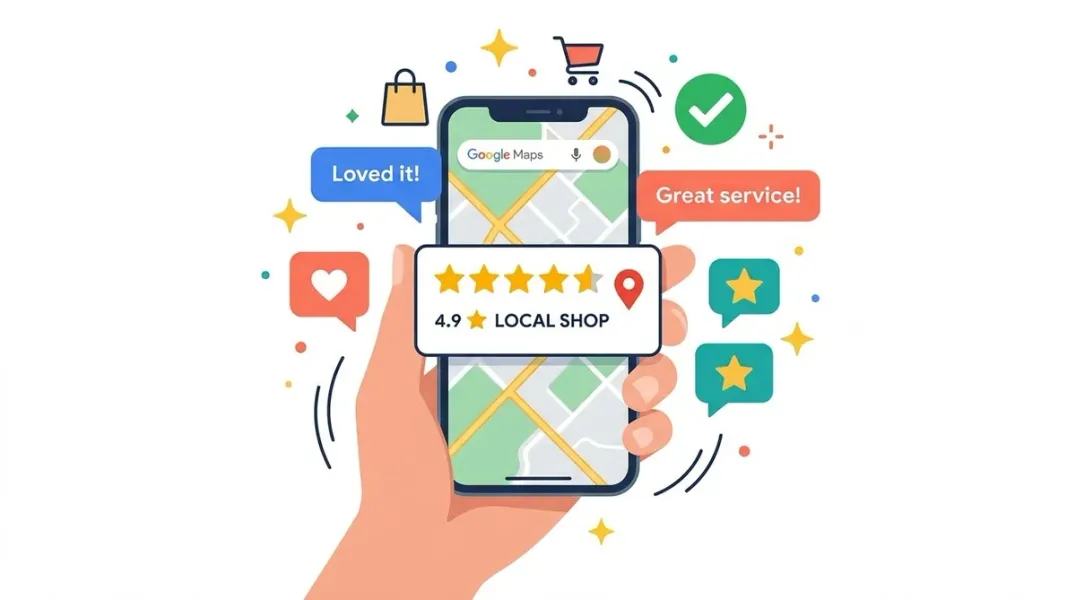
Before a customer ever calls your business, visits your store, or books your service, they have likely already made a decision about you. That decision is based on one thing: your Google Maps reviews. In the modern local buying journey, reviews are not just feedback—they are the primary trust signal that determines whether a customer chooses you or your competitor.
Consider the numbers. According to BrightLocal’s Local Consumer Review Survey, 97% of consumers read online reviews for local businesses, and 94% say that a positive review makes them more likely to use a business. Perhaps more striking: 89% of consumers expect businesses to respond to their reviews, and businesses that respond to reviews earn 35% more revenue on average. These are not marginal statistics. They represent a fundamental shift in how buying decisions are made.
Google Maps reviews are uniquely powerful because they appear at the exact moment of decision. When a customer searches “best coffee shop near me” or “emergency plumber open now,” the Map Pack appears with star ratings, review counts, and snippet highlights front and center. Before reading a single word of your website, the customer has already formed an impression. This guide explores the psychology, mechanics, and business impact of Google Maps reviews—and what you can do to harness their power.
Humans are social creatures. When we are uncertain, we look to others to guide our decisions. This phenomenon, known as social proof, is the psychological foundation of review influence. In a local search context, reviews serve as a proxy for personal recommendation. A stranger’s experience becomes a trusted signal that reduces the perceived risk of choosing your business.
Research from Northwestern University’s Spiegel Research Center found that displaying reviews can increase conversion rates by 270%. The effect is strongest for higher-priced or higher-risk purchases—exactly the kind of decisions people make when choosing a dentist, contractor, or auto repair shop.
But the influence of reviews is not linear. The same research found that a perfect 5.0 rating can actually be less persuasive than a 4.2 to 4.7 rating. Why? Because perfect ratings feel too good to be true. A few less-than-perfect reviews signal authenticity, showing that your business is real and that your reviews are not curated or fake.
The Numbers That Matter: Ratings, Volume, and Recency
Three quantifiable factors drive how Google Maps reviews influence buying decisions: the star rating, the volume of reviews, and how recent those reviews are.
Star Rating
The star rating is the first thing a customer sees. BrightLocal’s survey found that 91% of consumers are more likely to use a business with a 4-star rating or higher. Businesses with a 4.5-star rating or above capture the vast majority of clicks in the Map Pack. Below 4.0 stars, conversion drops sharply—consumers begin to associate the business with risk.
The optimal rating range is between 4.2 and 4.7. This range signals quality while maintaining authenticity. A business with a 4.8 rating and 200 reviews will typically outperform a business with a 5.0 rating and 12 reviews.
Review Volume
Volume is a trust multiplier. A business with 500 reviews is perceived as more established, more popular, and more reliable than one with 20 reviews—even if both have a 4.5-star rating. Volume also matters for Google’s ranking algorithm. Reviews are a confirmed local ranking factor, and businesses with more reviews tend to rank higher in the Map Pack.
How many reviews do you need? There is no universal number, but relative volume matters. If your top three competitors have 100, 150, and 200 reviews respectively, you need to be in that range or higher to compete.
Recency
Recency is the third pillar. A review from three years ago carries little weight with today’s consumer. BrightLocal found that 73% of consumers only pay attention to reviews written in the last month. A steady stream of recent reviews signals that your business is active, relevant, and consistently delivering quality.
This is why review velocity—the rate at which you accumulate new reviews—matters more than total count alone. A business with 50 recent reviews will often outperform one with 200 reviews from years past.
How Reviews Shape the Customer Journey
Google Maps reviews do not influence a single moment. They shape every stage of the local buying journey.
Awareness Stage
When a customer searches for a local service, the Map Pack appears with star ratings and review counts. At this stage, reviews determine whether your business gets noticed at all. A low rating or a low review count means you are effectively invisible, regardless of how good your actual service is.
Consideration Stage
Once your business is noticed, the customer begins to evaluate. They read review snippets, scan for keywords that match their needs (“fast service,” “fair pricing,” “friendly staff”), and look for red flags. This is where the content of your reviews matters. A review that mentions a specific problem the customer has (“fixed my leaky faucet in an hour”) is far more persuasive than a generic “great service.”
Decision Stage
At the decision stage, reviews act as the final trust signal. The customer compares your business to two or three competitors. The one with the strongest review profile—high rating, recent reviews, thoughtful responses—wins. According to a Harvard Business School study, a one-star increase in Yelp ratings led to a 5% to 9% increase in revenue. Google Maps reviews exert a similar, if not stronger, effect.
Post-Purchase Stage
Reviews also influence retention and referral. A customer who leaves a review and receives a response from the business is more likely to return. They become a brand advocate, and their review continues to influence future customers for years.
The Role of Review Content and Keywords
Star ratings grab attention, but review content drives conversion. Customers read reviews looking for specific information: Did the business solve a problem similar to mine? Was the pricing fair? Was the staff professional? Did they show up on time?
Businesses that encourage customers to mention specific services, locations, and experiences generate reviews that rank for long-tail keywords and answer future customers’ questions. For example, a review that says “They repaired my AC in under two hours on a Sunday in Plano” contains multiple valuable signals: service type (AC repair), speed (under two hours), availability (Sunday), and location (Plano).
Google’s algorithm also uses review content as a ranking signal. Reviews that mention your services and location naturally reinforce your relevance for local queries. This is why businesses should not simply ask for “a review”—they should ask for a review that describes the experience.
Responding to Reviews: The Hidden Conversion Lever
Responding to reviews is one of the most underutilized conversion strategies in local SEO. According to BrightLocal, 89% of consumers expect businesses to respond to reviews, and businesses that respond earn significantly higher trust.
Responding to Positive Reviews
When you respond to a positive review, you accomplish three things: you thank the customer (encouraging loyalty), you demonstrate engagement to future readers, and you naturally reinforce keywords. A response like “Thank you for choosing our Dallas plumbing team for your water heater installation. We are glad we could help!” reinforces service and location.
Responding to Negative Reviews
Negative reviews are inevitable. How you respond matters more than the review itself. A professional, empathetic response shows future customers that you take feedback seriously and are committed to resolution. Research shows that 45% of consumers are more likely to visit a business that responds to negative reviews.
The key is to respond quickly, acknowledge the issue, apologize without being defensive, and offer to resolve it offline. Never argue publicly. Future customers are watching.
The Competitive Advantage: Turning Reviews Into Market Intelligence
Your competitors’ reviews are a goldmine of market intelligence. By analyzing what customers praise and complain about in competitor reviews, you can identify gaps in the market and opportunities to differentiate.
If competitors are repeatedly criticized for slow response times, highlight your speed. If they are praised for friendly staff, ensure your team delivers the same. If they are criticized for hidden fees, emphasize your transparent pricing in your GBP description and review responses.
This intelligence also informs your review generation strategy. If customers consistently mention a specific service or experience in competitor reviews, ask your own customers to mention those same elements.
Conclusion
Google Maps reviews are not a vanity metric. They are the single most influential factor in local buying decisions, shaping awareness, consideration, and conversion at every stage of the customer journey. Star ratings, review volume, recency, and content all work together to determine whether a customer chooses you or your competitor.
The businesses that win are not necessarily the ones with the most reviews. They are the ones with a consistent, recent stream of authentic reviews, thoughtful responses, and a rating in the sweet spot of 4.2 to 4.7. They understand that reviews are not just feedback—they are the foundation of local trust.
The good news is that review influence is something you can actively manage. By implementing a simple review generation process, responding to every review, and using competitor reviews as market intelligence, you can turn your Google Maps presence into a customer acquisition engine.
Call to Action
Ready to turn your Google Maps reviews into revenue? Start by auditing your current review profile: check your rating, review count, and recency. Then implement a post-service review request process that makes it easy for satisfied customers to share their experience.
Download our Review Generation Toolkit for templates and best practices. Or contact our local SEO team to develop a review strategy tailored to your business. Your next customer is reading your reviews right now—make sure they like what they see.
FAQs
How many Google reviews do I need to influence buying decisions?
There is no fixed number, but relative volume matters. Aim to match or exceed your top competitors’ review counts while maintaining a steady velocity of new reviews each month. Recency is more important than total count.
What is the ideal star rating for a local business?
Research suggests 4.2 to 4.7 stars is optimal. A perfect 5.0 rating can seem inauthentic, while anything below 4.0 significantly reduces conversion. Authenticity and consistency matter more than perfection.
Do businesses really need to respond to every review?
Yes. 89% of consumers expect responses, and responding builds trust with both the reviewer and future customers. Prioritize negative reviews and recent reviews, but aim to respond to all.
Can I remove a negative Google review?
Only if it violates Google’s policies (spam, fake content, inappropriate language). Otherwise, the best strategy is to respond professionally and demonstrate your commitment to resolution. A well-handled negative review can actually build trust.
How do reviews affect Google Maps rankings?
Reviews are a confirmed local ranking factor. Businesses with higher ratings, more reviews, and recent review activity tend to rank higher in the Map Pack. Review content also reinforces relevance for local keywords.
Internal & External Links
Internal Links
- How to Optimize Google Business Profile for Voice Search (Topic 61)
- Google Business Profile Review Responses: What to Say in Different Situations (Topic 63)
- How to Get More Google Reviews Without Annoying Your Customers (Topic 64)
- How to Monitor Competitor Google Reviews and Find Market Opportunities (Topic 66)
External Sources
- BrightLocal Local Consumer Review Survey: https://www.brightlocal.com/research/local-consumer-review-survey/
- Harvard Business School: Reviews and Revenue Study: https://www.hbs.edu/faculty/Pages/item.aspx?num=43109
- Google Business Profile Help: Respond to Reviews: https://support.google.com/business/answer/3474050
- Spiegel Research Center: How Online Reviews Influence Sales: https://spiegel.medill.northwestern.edu/how-online-reviews-influence-sales/
What to Say in Google Review Responses: Templates by Situation
Master Google review responses with proven templates for every situation—positive, negative, neutral, and everything in between. Build trust and win customers.
/google-business-profile-review-responses-what-to-say
Introduction
Every Google review is a public conversation. When a customer leaves feedback, they are not just talking to you—they are talking to every future customer who will ever read your reviews. How you respond can be the difference between a prospect choosing you and choosing your competitor.
The data is unambiguous. According to BrightLocal’s 2026 survey, 89% of consumers expect business owners to respond to reviews, and 88% say they would use a business that responds to all reviews, positive and negative . Yet the reality is starkly different: an analysis of 229,882 Google reviews found that only 29.3% of five-star reviews and just 9.8% of one-star reviews ever receive a public reply . Nine out of ten unhappy customers never hear back at all.
That gap is your opportunity. A thoughtful, situation-appropriate response does more than acknowledge feedback—it demonstrates professionalism, reinforces your brand values, and turns a public review into a marketing asset. This guide provides proven templates and strategies for every review situation you will encounter.
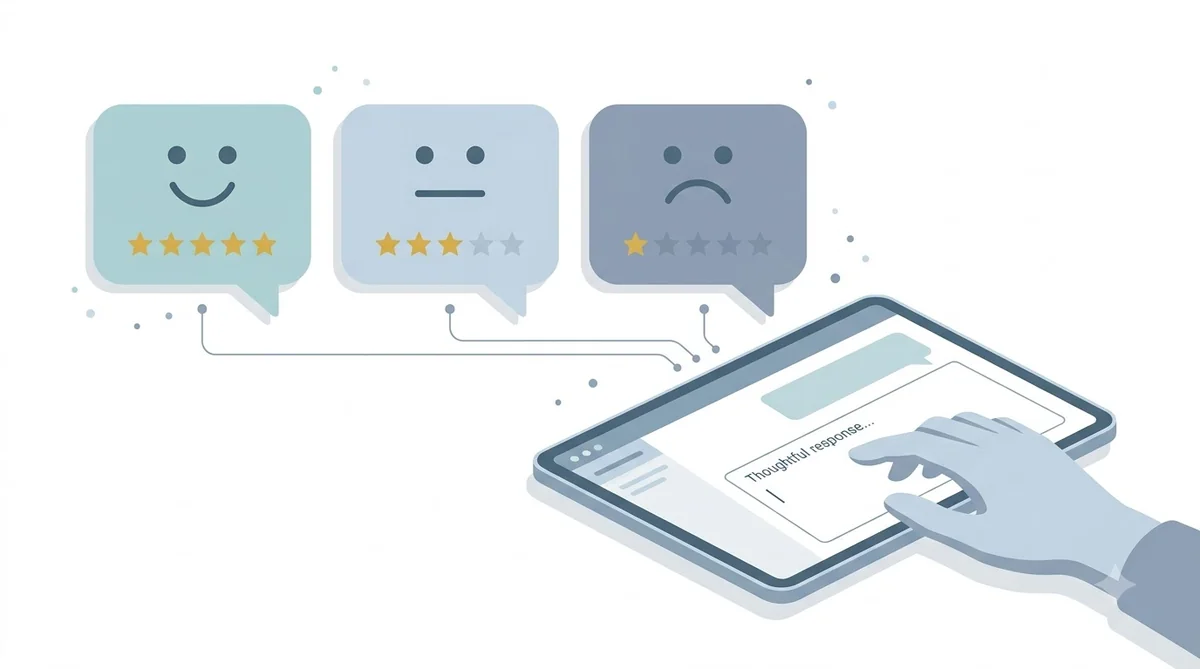
Your response is not just for the reviewer. It is for the silent audience—the dozens or hundreds of potential customers who read your reviews before deciding whether to contact you. Research from BrightLocal confirms that 50% of consumers say generic, templated responses make them less likely to choose a business .
The dividing line is personalization, not authorship. An AI draft or a saved template is a fine starting point. A reply that reads as copy-paste is what costs you customers. The workable approach is to scaffold first, then personalize: start with a template for structure, add the reviewer’s name and one specific detail from their review, adjust the wording so it sounds like you, and read it once before posting .
Google’s own guidance reinforces this. The platform advises businesses to “be a friend, not a salesperson”—keep replies useful, readable, and courteous, without promotional language or incentives .
Responding to 5-Star Reviews
Five-star reviews are your warmest leads. The customer already loves you. Your response should thank them, reinforce the specific thing they praised, and gently invite them back—without sounding like a sales pitch.
Template for a detailed 5-star review:
“Thank you so much, [Name]! We’re thrilled that [specific detail from their review] hit the mark. Our team works hard to [reinforce the quality they mentioned], so hearing this really means a lot. We’d love to see you again soon!”
Example:
Review: “Amazing service! The team went above and beyond to help me find the perfect gift. The store was beautifully organized, and everyone was so friendly. I’ll definitely be back!”
Response: “Sarah, this genuinely made our morning. Thank you! Helping people find that perfect gift is honestly our favorite part of the job. We’ll pass this along to the team—they’re going to love hearing it. See you next time!”
Template for a staff shoutout:
“Hi [Name], thank you for taking the time to mention [Employee Name] specifically! They’re one of our most dedicated team members, and reviews like yours are exactly why they do this. We’ll make sure they see your kind words. Come back and ask for them by name next time!”
Template for a short or emoji-only review:
“Thanks for the five stars, [Name]—we really appreciate it. If you ever have a moment to tell us what stood out, we’d love to hear it.”
Responding to 4-Star Reviews
Four stars means the customer liked you, but something held them back from the fifth star. Usually they will tell you what it was. Do not ignore it; do not get defensive. Acknowledge it, show you heard them, and give them a reason to return .
Template:
“Thank you, [Name]! We’re glad [positive element] delivered, and fair point on [the issue they mentioned]. We’ve been [what you’re doing about it], and honestly, we’re not quite where we want to be yet. If you do come back, [suggestion for a better experience]. Hope to see you again!”
Example:
Review: “Really enjoyed the food and atmosphere. Service was a bit slow on Saturday night, but the staff was apologetic and the meal was worth the wait. Would come back on a weeknight.”
Response: “So glad the food delivered, and fair point on Saturday night. We’ve been adjusting our kitchen flow for peak hours, and honestly, we’re not quite where we want to be yet. Weeknights genuinely are a different, calmer world in here. If you do come back, try the Thursday special. Hope to see you again!”
Responding to 3-Star Reviews
Three stars is a shrug. The customer is not furious—just not convinced. This is the rating businesses handle worst, often responding with hollow corporate-speak or strange defensiveness. But three-star reviewers are often the most convertible. They are not burned; they are just not wowed. Your job is to give them one good reason to come back .
Template:
“Thank you for the honest feedback, [Name]. You’re right about [the issue], and that’s on us. [Brief context or what you’re fixing]. If you’re willing to give us another shot, [specific invitation]. I’d like to make the next experience better.”
Example:
Review: “Product quality is decent but shipping took way longer than expected. Customer service was helpful when I reached out though. Just wish it arrived on time like promised.”
Response: “You’re right. A promised delivery date is a promise, and we didn’t keep it. We’ve been dealing with a carrier issue we’re actively sorting through, but that’s context, not an excuse. I’m glad our team was responsive. If you’re willing to give us another shot, reach out directly and mention this. I’d like to make the next experience a lot better.”
Responding to 2-Star Reviews
A two-star review means the customer is genuinely disappointed. The gap between expectation and reality was wide enough that they took time to say so publicly. Do not minimize it. Do not explain it away. Own it.
Template:
“Hi [Name], thank you for sharing this. I’m sorry your experience fell short—that’s not the standard we hold ourselves to. I’d like to understand what happened and make this right. Please reach out to me directly at [contact] so we can discuss this personally. — [Your Name], [Title]“
Responding to 1-Star Reviews
One-star reviews feel like a punch to the gut. Your instinct might be to get defensive, argue the facts, or ignore it entirely. All three responses are wrong. How you respond is one of your most powerful reputation tools, because your audience is not the unhappy reviewer. It is every future customer reading the exchange .
The Golden Rules:
- Respond within 4-24 hours. Speed signals that you take feedback seriously .
- Never argue, get defensive, or question the reviewer’s account publicly.
- Acknowledge their experience and apologize for the dissatisfaction—not necessarily for being wrong.
- Take the conversation offline by providing a direct contact.
- Keep responses professional, concise (3-5 sentences), and empathetic.
- Sign with your name and title to humanize the response .
Template for service quality complaint:
“Hi [Name], I appreciate your honest feedback about your recent experience. We take quality seriously, and I’m disappointed we fell short in your case. I’ve already looked into the specifics you mentioned and want to make sure we address this personally. Would you please contact me at [phone/email]? I want to make this right. — [Your Name], [Title]”
Template for wait time or scheduling complaint:
“Hi [Name], thank you for letting us know about the wait time you experienced. Your time is valuable, and we take scheduling seriously. I’ve reviewed what happened on your visit and am implementing changes to prevent this in the future. I’d love to make it up to you—please contact me directly at [phone/email]. — [Your Name], [Title]”
Template for pricing complaint:
“Hi [Name], thank you for your feedback. I understand that pricing is an important factor, and I’m sorry if we didn’t communicate the value of our service clearly enough upfront. We strive to be transparent about costs and what’s included. I’d welcome the chance to discuss your experience directly—please reach out at [phone/email]. — [Your Name], [Title]“
Responding to Suspected Fake or Competitor Reviews
Not every negative review is legitimate. Google has clear policies about what constitutes a removable review—spam, fake content, off-topic commentary, conflicts of interest, restricted content, or personal information. You cannot flag reviews simply because they are negative or because you disagree .
Template for suspected fake review:
“Hi, we take all feedback seriously. However, we’re unable to find a record of your visit in our system. We’d like to look into this further—could you please contact us at [phone/email] with your appointment or order details? We want to make sure we address any legitimate concern. — [Your Name], [Title]”
If the review clearly violates Google’s policies, flag it for removal through your Google Business Profile dashboard and document your reasoning.
Responding to Star-Only Ratings (No Text)
Star-only ratings with no text are increasingly common. They still deserve a reply.
Five stars, no text:
“Thanks for the five stars, [Name]—we really appreciate it. If you ever have a moment to tell us what stood out, we’d love to hear it.”
One star, no text:
Treat it like any negative review: stay calm and invite the real story in private. “Hi [Name], thank you for the rating. We’d like to understand what happened so we can make it right. Please reach out to us at [contact]. — [Your Name], [Title]“
Responding to Reviews Mentioning Specific Products or Services
This is your best local SEO opportunity in any review response. When a customer names a specific product or service, echo that exact phrase back in your reply. Google’s algorithm picks up on service-relevant keywords in review responses. Repeating “the smoked brisket” or “the roof inspection” signals that your business actually offers that specific thing—and it is not keyword stuffing, because you are echoing the customer’s own words .
Template:
“Thank you, [Name]! We’re so glad the [specific product/service] hit the spot. [Brief detail about what makes it special]. If you ever need us again, we’re just a call away.”
Example:
Review: “The roof inspection was thorough and the team was professional.”
Response: “Hi Renee, thank you so much for trusting us with your roof inspection! We know that kind of project can feel stressful, and we’re glad our team made the process straightforward. If you ever need us again, we’re just a call away.”
The Business Case for Responding to Every Review
Beyond reputation, responding to reviews has measurable business impact. A study by Womply analyzed transaction data from more than 200,000 U.S. small businesses and found that businesses replying to at least 25% of their reviews earned 35% more revenue than average. Businesses that did not respond to any reviews earned 9% less . The same research found that consumers spend up to 49% more at businesses that reply to reviews.
A study in the Journal of the Academy of Marketing Science analyzed more than 150,000 reviews and responses, finding that customized replies to positive reviews produced the most reliable lift in future ratings and financial performance . Responding to negatives was more complex—sometimes causing a short-term dip as more complaints surfaced while building trust over the longer run. The practical lesson: your happy reviewers are worth real replies, not just your unhappy ones.
Conclusion
Every Google review is an opportunity to demonstrate who you are as a business. A thoughtful response can turn a disappointed customer into a loyal one, convince a hesitant prospect to choose you, and reinforce the qualities that make your business worth visiting.
The templates in this guide provide a starting point, but the most important principle is personalization. Use the reviewer’s name. Reference a specific detail from their experience. Sign your own name. Show that a real human read their words and cared enough to respond thoughtfully.
The businesses that master this—that respond consistently, appropriately, and humanely—build a reputation that speaks for itself. In local search, that reputation is everything.
Call to Action
Ready to turn your reviews into a trust-building engine? Start by auditing your recent reviews. Identify which ones still need responses, then use the templates in this guide to craft personalized replies.
Download our Review Response Templates Pack for ready-to-use scripts for every situation. Or contact our local SEO team to develop a review management strategy that saves time and builds trust. Your next customer is reading your reviews right now—make sure they like what they see.
FAQs
Should I respond to every Google review, even the positive ones?
Yes. 88% of consumers say they would use a business that responds to all reviews, positive and negative. Responding only to one type of review—positive or negative—makes consumers less likely to choose you. Aim for consistency .
How quickly should I respond to a negative review?
Speed matters. Aim for 4-24 hours for negative reviews. Responding promptly shows you take feedback seriously and prevents the complaint from sitting unanswered on your profile for weeks . A one-star review answered the same day says “we’re on it.” Answered in week three, it says “we finally noticed” .
Can I use AI to draft review responses?
Yes, Google has confirmed that using AI to draft responses is not against its guidelines. However, 50% of consumers say generic, templated responses make them less likely to choose a business. Use AI or templates for structure, then personalize with the reviewer’s name and specific details from their review .
What if the negative review is fake or from a competitor?
If a review violates Google’s policies—spam, fake content, conflict of interest—you can flag it for removal. However, do not flag reviews simply because they are negative. For suspected fakes, respond professionally, note that you cannot find their record, and invite them to contact you directly to resolve the issue .
How long should a review response be?
Keep responses concise—3-5 sentences for negative reviews, shorter for positive ones. Users are looking for useful and genuine responses, but they can easily be overwhelmed by long replies. The goal is to be helpful, not to write an essay .
Internal & External Links
Internal Links
- How to Optimize Google Business Profile for Voice Search (Topic 61)
- How Google Maps Reviews Influence Customer Buying Decisions (Topic 62)
- How to Get More Google Reviews Without Annoying Your Customers (Topic 64)
- The Complete Local SEO Review Response Strategy for Small Businesses (Topic 65)
External Sources
- BrightLocal Local Consumer Review Survey: https://www.brightlocal.com/research/local-consumer-review-survey/
- Google Business Profile Help: Manage Customer Reviews: https://support.google.com/business/answer/3474050
- Google Business Profile Help: Tips to Get More Reviews: https://support.google.com/business/answer/3474122
- Womply: How Online Reviews Impact Small Business Revenue: https://www.womply.com/blog/how-online-reviews-impact-small-business-revenue/
Grow Your Google Maps Ranking on Autopilot
Stop spending hours every week manually replying to customer reviews and writing Google posts. Busirank automates your Google Business Profile to boost your local SEO rankings and turn searchers into paying clients.

 Busirank Team
